Why your LMA data does not match your own waste data

TL;DR
- The competent authority compares the waste figures in your e-MJV with the data of the LMA, the Dutch national waste register.
- In practice the LMA data differs 10 to 60% from actual waste streams, because the recipient reports to the LMA and the waste producer reports in the e-MJV.
- As the reporting company you have to explain the differences. Do that before you submit, based on your own source data, and attach the explanation.
Anyone who submits the e-MJV, the annual environmental report for industrial sites in the Netherlands, almost always gets questions about the waste section. An important reason is that the competent authority compares your figures with the data of the LMA (Landelijk Meldpunt Afvalstoffen), the Dutch national waste register. And the two rarely match.
In practice we see differences of 10 to 60% between the LMA data and a company's actual waste streams. That does not mean something is going wrong. It is because the LMA and your own records are compiled in different ways. As the reporting company, however, you have to be able to explain those differences.
How the LMA works
The LMA collects notifications about waste arriving at processors. The notification is not made by the company the waste comes from, but by the party that receives it. In the e-MJV it is the other way round: there you report on your own waste as the waste producer.
Formally this is not a duplicate notification. The competent authority does use the LMA as a check. It verifies whether what you say you transferred matches what processors say they received. If the two differ widely, you receive a question.
What this means for your e-MJV
So you cannot simply copy the LMA data into your e-MJV. You cannot ignore it either, because the competent authority does look at it. If your figures per EURAL code (the Dutch version of the European List of Waste) differ by more than 10% from the LMA data, you will get questions from the competent authority. Given the differences we see in practice, that is always the case.
A difference is not a problem in itself. A new waste collector, a renovation or a change in production can be a good explanation. The problem arises when you do not have that explanation, or only start looking for it when the question comes in.
How to deal with it
Work from your own source data. Base your e-MJV on what you can substantiate yourself: invoices, weighbridge tickets and waste transport notes (begeleidingsbrieven). That is where your figures come from, and that is also how you answer questions.
Request the LMA data and put it alongside. Compare per EURAL code what you transferred with what is in the LMA. Do that before you submit, not after.
Look into the large differences. Start with the streams with the largest difference and find out where it comes from.
Record the explanation. Briefly describe for each difference where it comes from. Attach that to your e-MJV. Then the competent authority already knows before it asks the question.
Make agreements with your waste collectors. Ask how they report your waste, under which name and under which waste stream number (afvalstroomnummer). Then you will see fewer differences the following year.
How geoFluxus helps
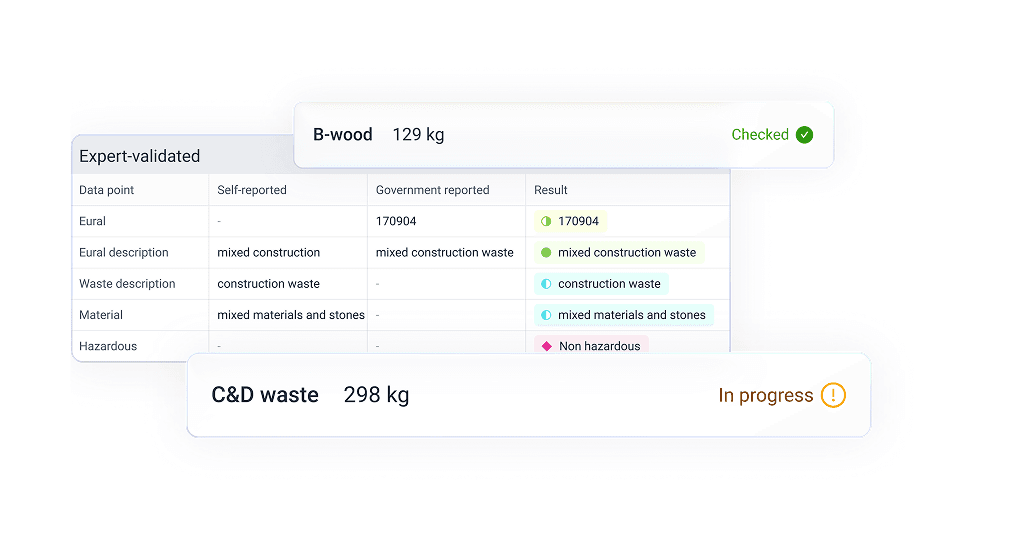
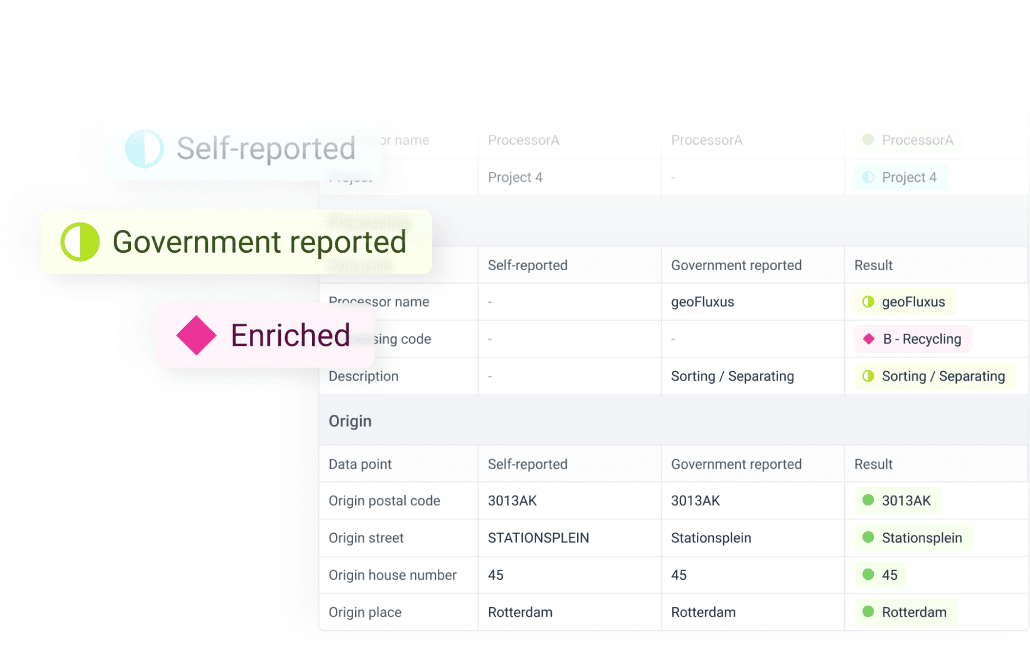
This research takes a lot of time, especially with several sites and collectors. geoFluxus also has access to the LMA data and compares it with your source data. Per EURAL code and per site you see where the differences are and where they come from.
That way you already have the explanation before you submit. You get fewer questions from the competent authority, and you answer the ones that do come straight away, because every figure can be traced back to the document it comes from.
In conclusion
Differences between the LMA and your own records are normal. They arise because two systems are filled in different ways. As the reporting company you do have to explain them. If you do that in advance, you have far less work in March and afterwards.
Read more about the e-MJV in What is the e-MJV and how do you handle it? Would you like to know how geoFluxus delivers your waste report? Read how it works.
Related Content