From waste to a circular economy
At geoFluxus, we help companies and governments gain insight into their waste streams and map them clearly and completely. Our platform provides not only the necessary data, but also the support to actually achieve sustainability goals. In this way, we help our customers deal responsibly and effectively with their impact on the environment.

Supported by
geoFluxus is supported by the European Regional Development Fund (ERDF) and by EIT Urban Mobility, an initiative of the European Institute of Innovation and Technology (EIT), a body of the European Union.
How it began
GeoFluxus began in 2020 as a spin-off of Delft University of Technology, born out of the PhD research of our founders Arnout Sabbe and Rusnė Šilerytė, which started in 2016. In 2019, commissioned by the City of Amsterdam, we developed the world's first monitor for the circular economy.
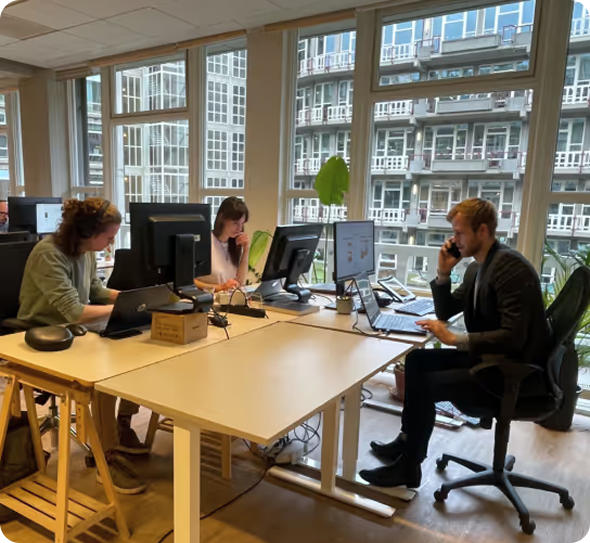
Since then, we have grown into a leading platform that helps governments and companies gain insight into waste and material streams. Our dedicated in-house software design and development team works with a group of specialized waste data scientists to continuously improve our technology. In addition, our enterprise sales team with dedicated account managers provides tailored support to our partners.
The story behind the name
Our name, geoFluxus, was born in a typical moment of chaos and inspiration at the coffee maker, just in time for our first deadline. "Geo" represents our commitment to a sustainable world, and "Fluxus" symbolizes the constant movement and transformation of waste. And why the capital "F"? That's our subtle nod to progress, which is also reflected in the rising line in our logo. It reflects our ambition to make a lasting impact.
Waste does not exist
There is a large information asymmetry between waste producers and (circular) waste processors. Many waste producers are in the dark when it comes to the opportunities and impact of their waste management. Our mission is to bridge this gap and ensure that environmental and financial benefits go hand in hand in a sustainable approach to waste.
A circular economy is insufficient to achieve human well-being within planetary boundaries
All achievements are proportional to their contribution to the transition
Questions cannot be answered by data, searches can
Numbers have no meaning, we provide them with that
Numbers have There is no "one size fits all" sustainable economy meaning, we provide them with that
Linear is not the opposite of circular
Awards
To make the transition to a circular economy measurable, we use six key indicators. These provide insight into material flows, environmental impacts, and opportunities for improvement. With these indicators you make sustainability results concrete and you can optimize in a more targeted way.


Our team
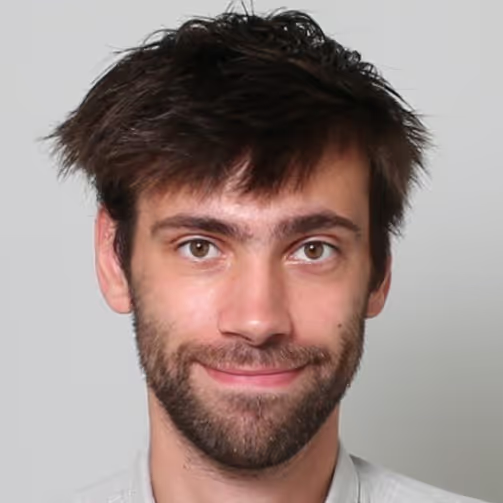
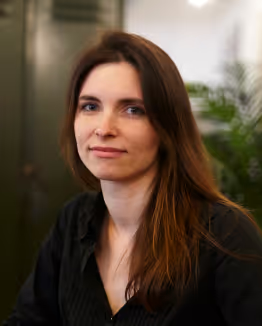
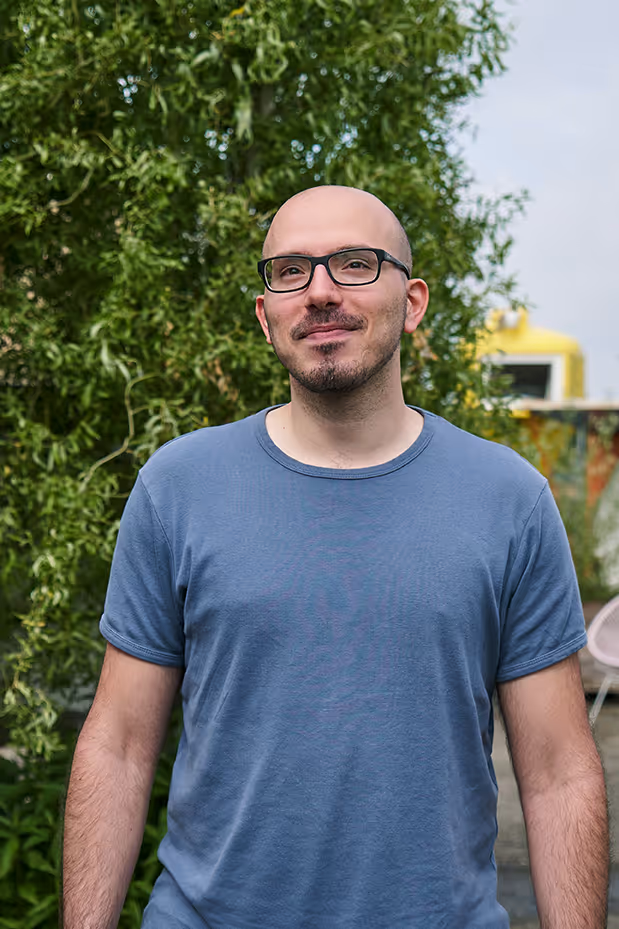
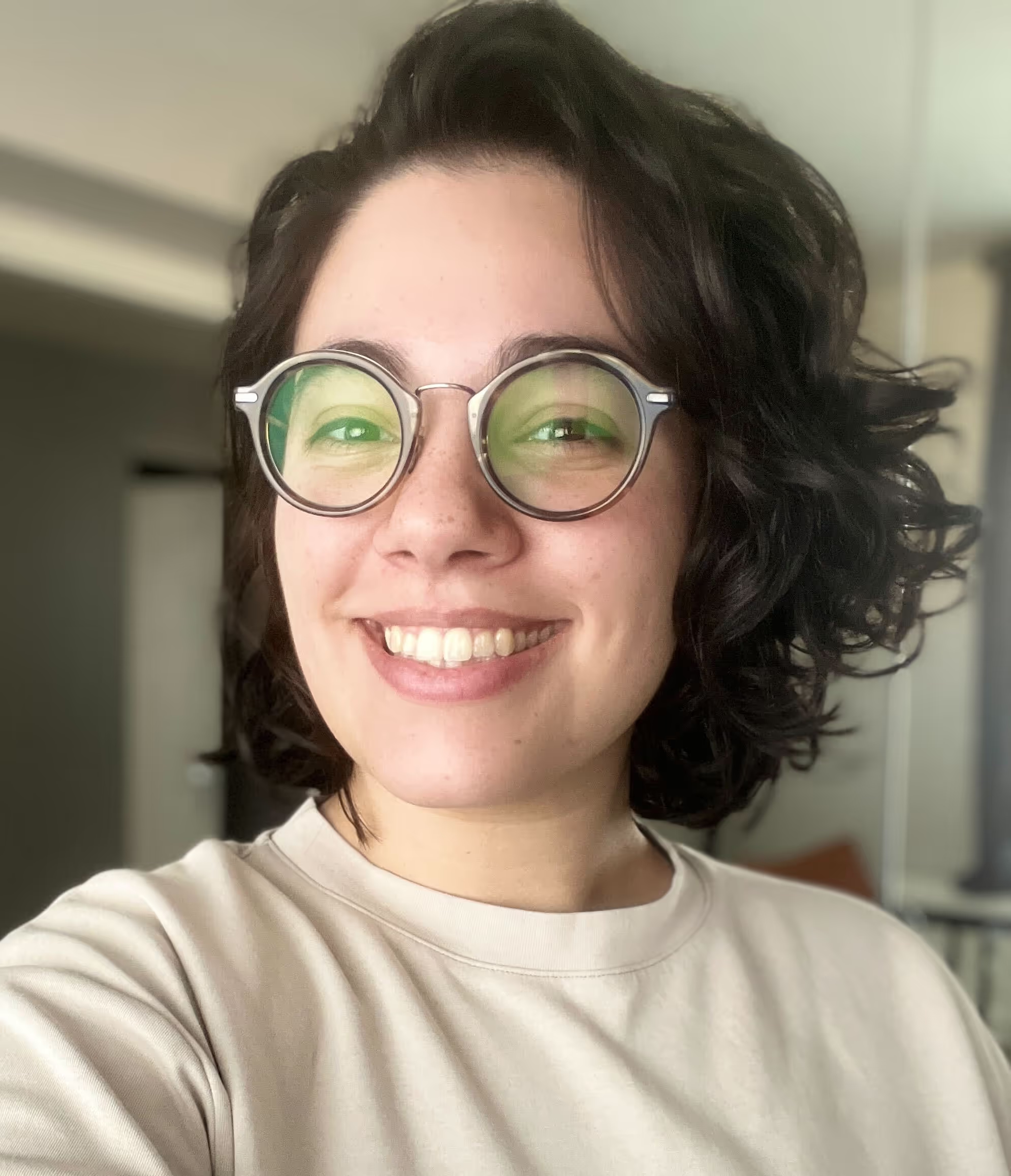
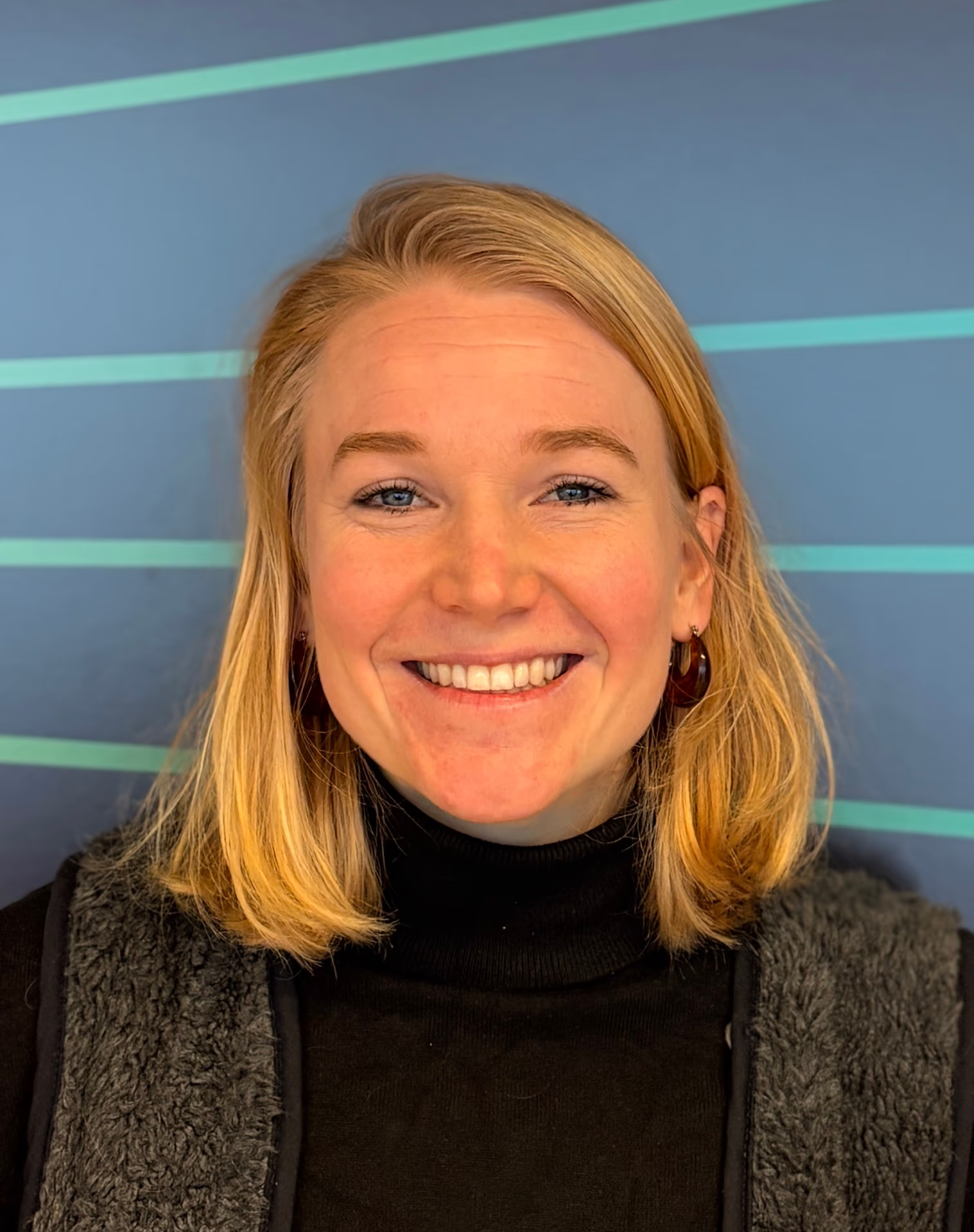
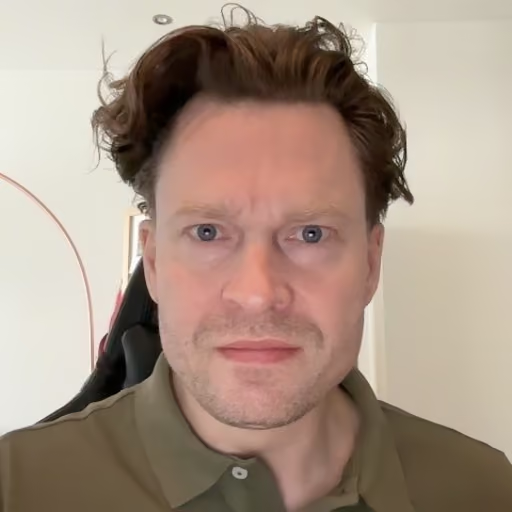
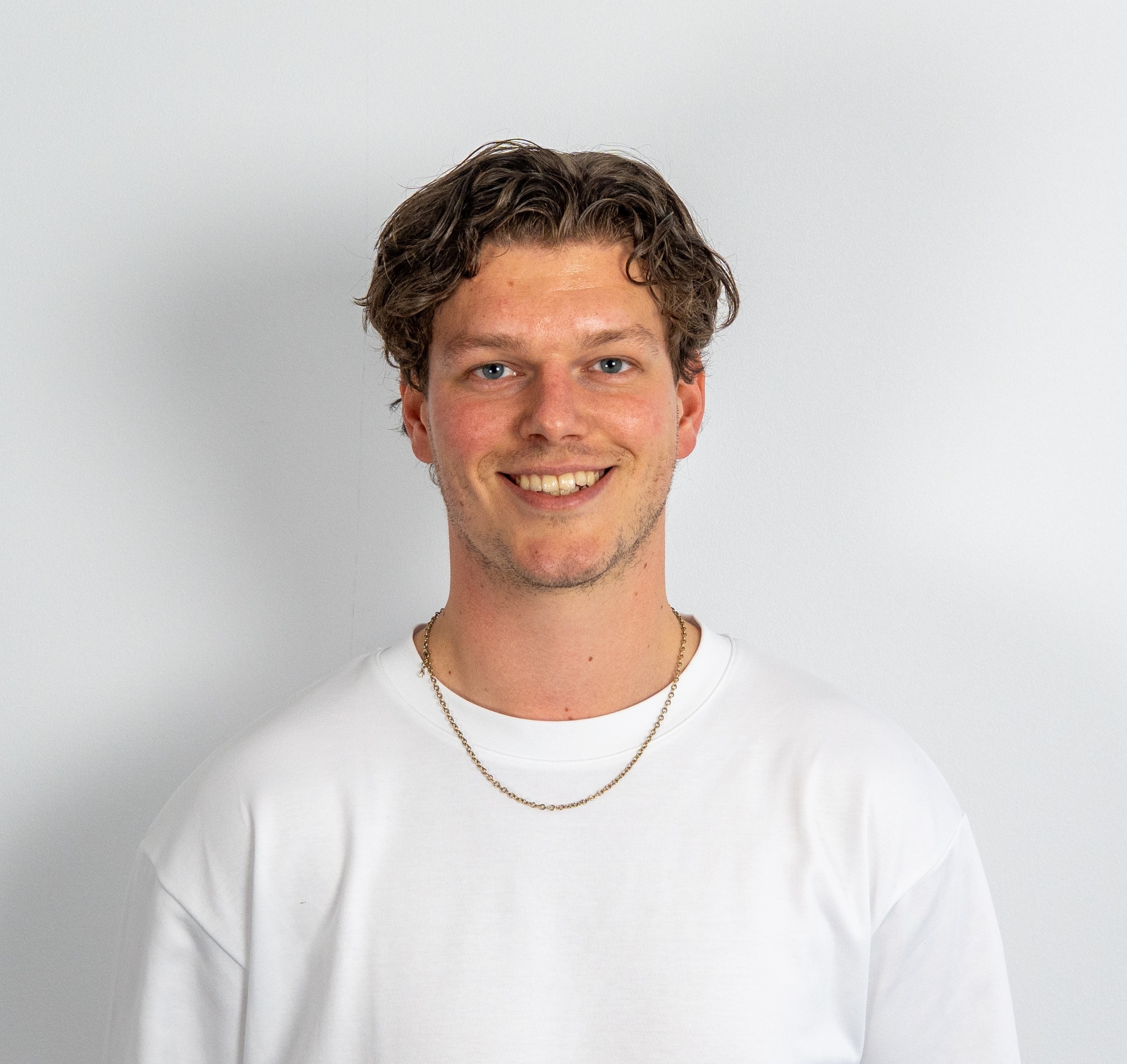
Together, we strive to make a difference in the world with our expertise in sustainability and advanced data analytics. Meet the people behind our mission.


Join the geoFluxus team!
Are you excited to contribute to a more sustainable world with your expertise? Join our passionate team and make a difference with us!
Business Operations Manager
We’re looking for a Business Operations Manager to become the backbone of geoFluxus’ day-to-day operations. You’ll take ownership of financial administration and reporting, contracts and processes, project support, and investor reporting. This role is ideal for someone who is highly organized, comfortable with numbers, and enjoys bringing structure to a fast-moving environment.


Open application
No suitable vacancy, but enthusiastic? We would love to hear how you can join our team.