
TL;DR
- In the e-MJV you report per site: every site that is required to report has its own report, its own competent authority and its own assessment.
- A group account lets you log in centrally for all your sites, but you still collect the data per site yourself. Apply for the account before 1 February.
- Record waste data at all locations in the same way and in one place, and check per location and per waste stream number.
For a company with one location, the e-MJV, the annual environmental report for industrial sites in the Netherlands, already takes a lot of work. With several sites the work does not just grow, it also becomes more complex. Each location has its own waste collectors, its own waste streams and often its own way of keeping records. In this blog you can read how to keep that manageable.
You report per site
The e-MJV is not about your organisation as a whole, but about each site separately. Whether a location has to report depends on the activity that takes place there, the capacity and whether the thresholds are exceeded.
A group with ten locations can therefore be required to report at three locations and not at the other seven. Those seven must still be able to show that they stay below the thresholds, if their activity is covered by the scheme. So you need to know where you stand for each location.
Each site that is required to report has its own report, its own competent authority and its own assessment. Two locations in different provinces will therefore also deal with different assessors.
The group account
Are you responsible for entering data for several sites? Then you can apply for a group account (concernaccount). You get one username and one password for all those sites. As the main user you can authorise colleagues, for example the HSE coordinator at each location.
You apply for the group account using a form that you email to the e-MJV helpdesk. The helpdesk sends the password within five working days. Do submit the application before 1 February, because after that this turnaround is no longer guaranteed.
A group account makes logging in simpler. Collecting the data per site remains your own work.
Where it often goes wrong with multiple sites
Every location works differently. One site keeps an Excel file, another keeps invoices in a folder, a third relies on the waste collector's statement. Merging that data takes a lot of time and is prone to error.
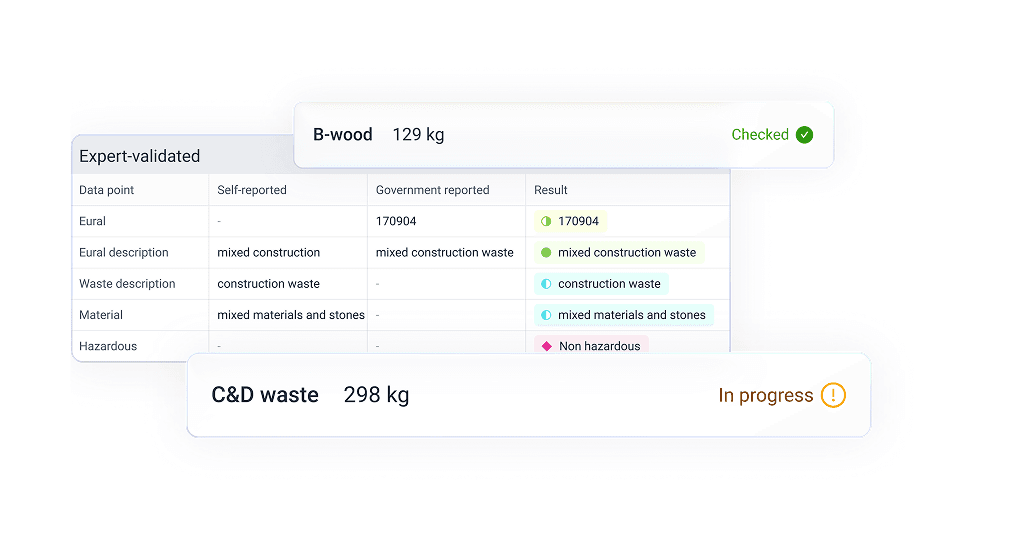
Different collectors, different formats. Every waste collector supplies its data differently, with different descriptions and sometimes different EURAL codes (the Dutch version of the European List of Waste) for comparable waste.
Waste at the wrong site. If a waste transfer is recorded under the wrong waste stream number (afvalstroomnummer) or at the wrong address, the waste shifts to another location. In the LMA, the Dutch national waste register, that shows up as a difference, and the competent authority will ask questions about it. Read more in Why your LMA data does not match your own waste data.
No comparison between locations. If each site draws up its own report, you do not see where waste per tonne of product is higher or where a stream is treated differently. You then miss opportunities to save or to separate better.
The knowledge sits with a few people. At each location often only one person knows how it works. If that person is unavailable, reporting for that site comes to a standstill.
How to keep the overview
One way of working for all locations. Agree how each site records its waste data: which data, from which source and in what form. Lay that down in your measurement and registration system.
One place for all data. Collect the statements, invoices and weighbridge tickets of all locations centrally, not in separate folders per site.
Check per location and per waste stream number. Verify that each transfer is recorded at the correct site. Compare per location with last year and with the LMA data.
Start in good time. With several sites, the work grows faster than expected. Start in January, and apply for the group account before 1 February.
Compare the locations with each other. If the data of all sites is recorded in the same way, you can put them side by side. Then you see where you can save or separate better.
How geoFluxus helps
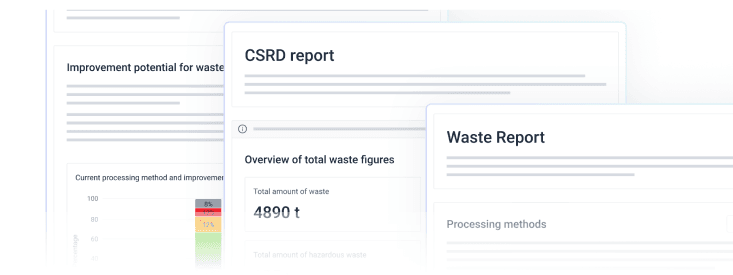
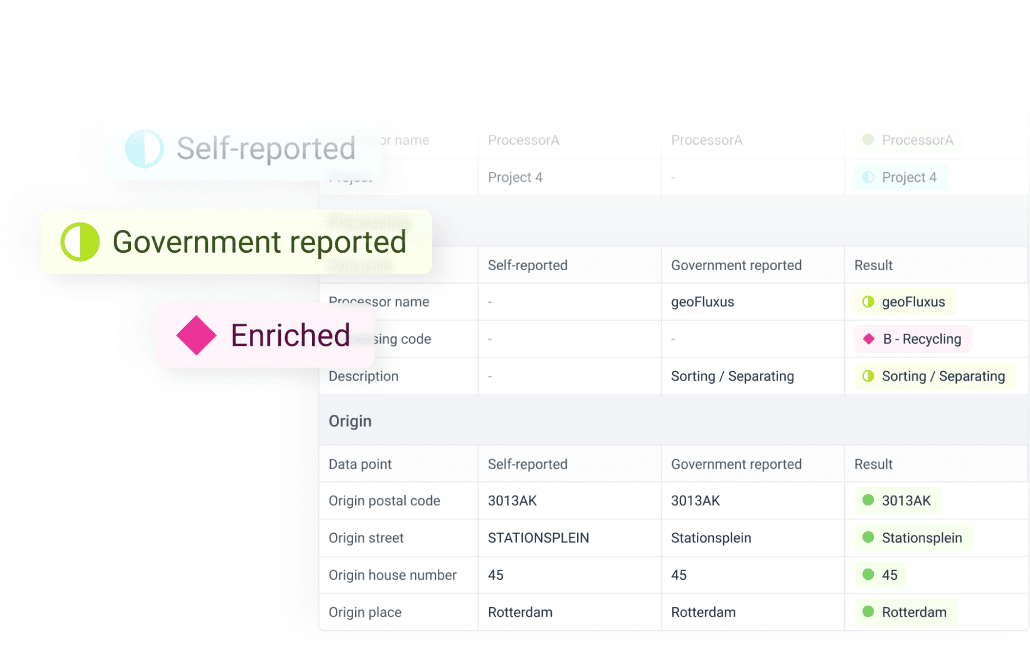
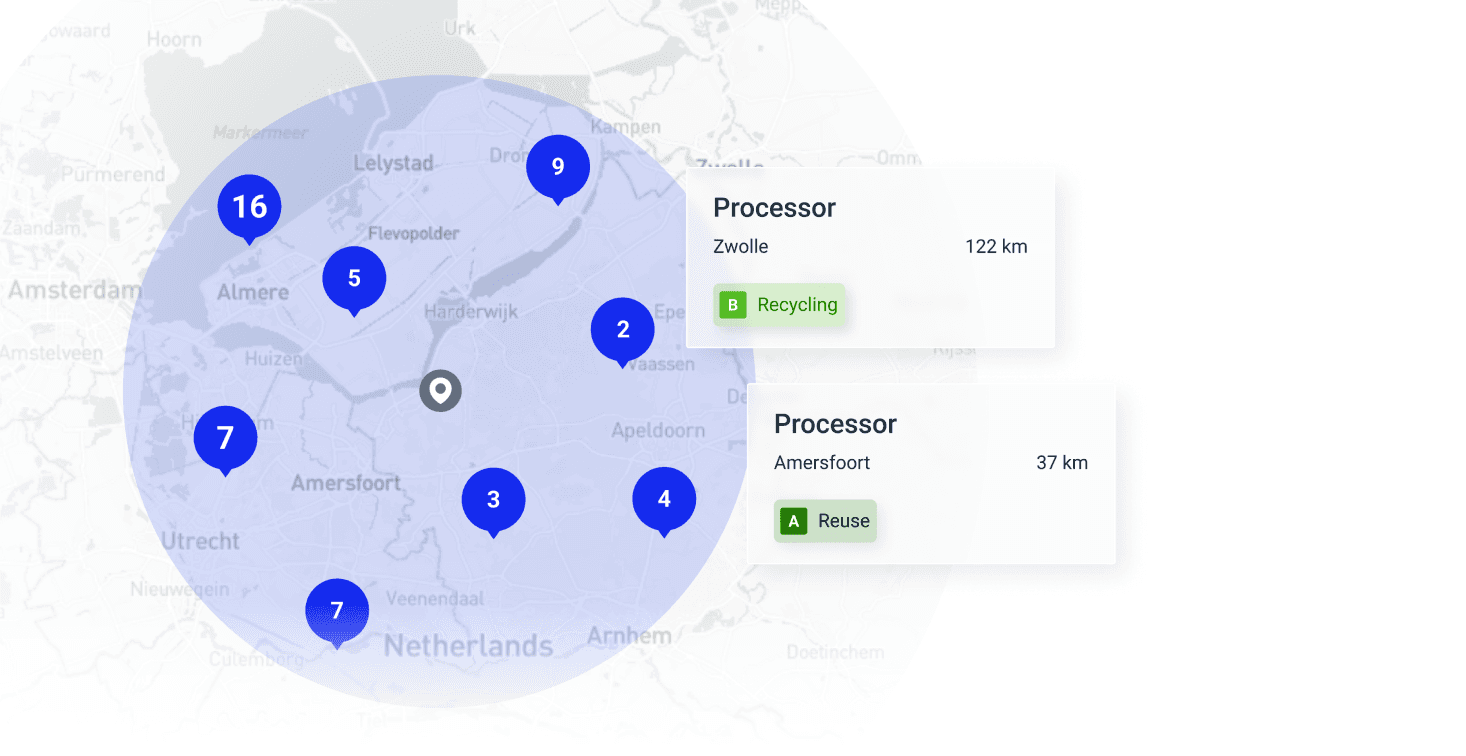
Handling the waste section yourself takes at least 70 hours per site per year. With several sites that quickly adds up. geoFluxus brings the waste data of all your sites and waste collectors together in one place. We link each stream to the correct EURAL code and treatment, compare your data per location with the LMA data, and deliver the waste report per site in the format of the e-MJV. You also see all locations in one overview.
In conclusion
Multiple sites does not just mean more of the same, but also more chance of errors and differences. If you record everything in the same way and in one place, you keep the overview. Read how geoFluxus delivers the waste report.
Related Content