
“Over the years we’ve invested significantly in our field data team - focusing on producing trusted ratings. While this ensures the accuracy of our Ratings, it doesn’t allow the scale across the thousands of projects that buyers are considering.”

For more information on carbon credit procurement trends, read our "Key Takeaways for 2025" article. We share five, data-backed tips to improve your procurement strategy.
One more thing: Connect to Supply customers also get access to the rest of Sylvera's tools. That means you can easily see project ratings and evaluate an individual project's strengths, procure quality carbon credits, and even monitor project activity (particularly if you’ve invested at the pre-issuance stage.)
Book a free demo of Sylvera to see our platform's procurement and reporting features in action.
Why Waste Analysis Has Become a Management Issue
Waste has always existed in many forms across business operations: production residues, packaging, hazardous waste, office supplies, and materials lost through inefficient processes. What has changed is how visible — and costly — these flows have become.
For large enterprises operating multiple sites, waste analysis is no longer just a reporting task. It now sits at the intersection of compliance, procurement, sustainability, and operations. ESG reporting obligations, inspections, and customer demand for proof of circularity are converging with rising transport, treatment, and disposal costs.
At the same time, organisations are under pressure to improve efficiency, eliminate unnecessary movement, reduce excessive inventory, and demonstrate continuous improvement across the production process. Waste analysis is increasingly expected to support all of this — yet most organisations are still relying on fragmented data and static reports.
The result is a familiar pattern: waste numbers exist, but they are difficult to interpret, compare, or defend.
What Waste Analysis Means in an Enterprise Context
In an enterprise setting, waste analysis is the structured and ongoing evaluation of waste streams across sites, facilities, and contractors, using verified data to support waste management decisions.
It is performed to understand:
- which waste categories exist across the organisation
- how waste is generated within production, manufacturing, logistics, and service processes
- where hazardous waste and land disposal restrictions apply
- how waste is collected, transported, and treated after leaving the site (e.g. recycling, recovery, incineration, disposal)
- what organisations actually pay per tonne
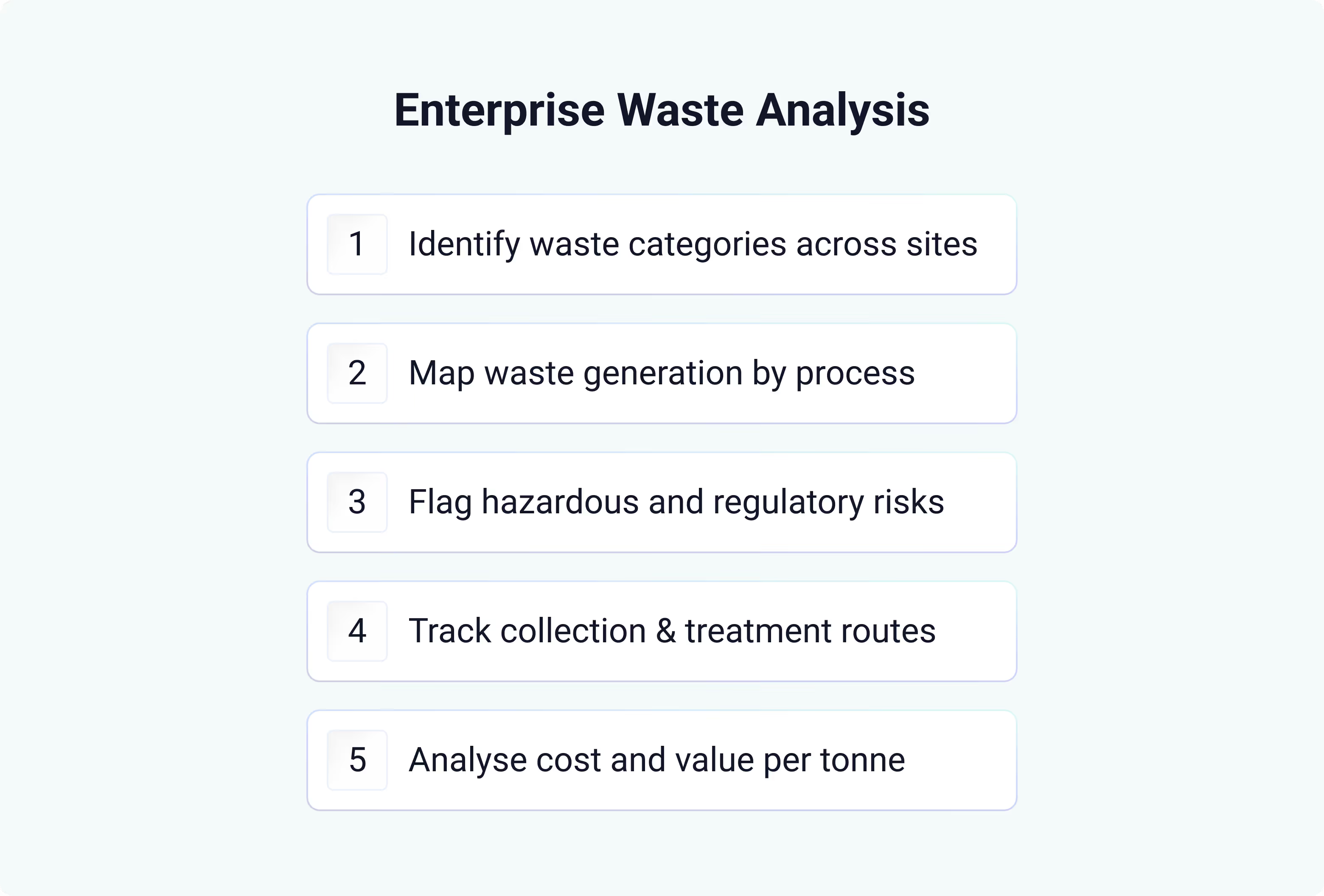
This goes beyond measuring waste volumes. Enterprise waste analysis connects waste data to cost, risk, and value, allowing organisations to determine where intervention is needed and where improvement will have the greatest impact.
Categorizing Waste: The Role — and Limits — of EWC / LoW Codes
For enterprises, categorising waste correctly is a prerequisite for meaningful waste analysis — and this is where the role and limits of EWC / LoW codes become important. The European Waste Catalogue (EWC), also referred to as the List of Waste (LoW), is the EU’s standard classification system for waste types. It supports harmonised classification (including hazardous waste identification) and is widely used for regulatory reporting and compliance.
The system classifies waste using a combination of the waste type and the process or activity that produces it, which means the code tells you something about the type of waste — but not necessarily the practical detail you need to manage the stream (e.g., composition, contamination, or treatment constraints).
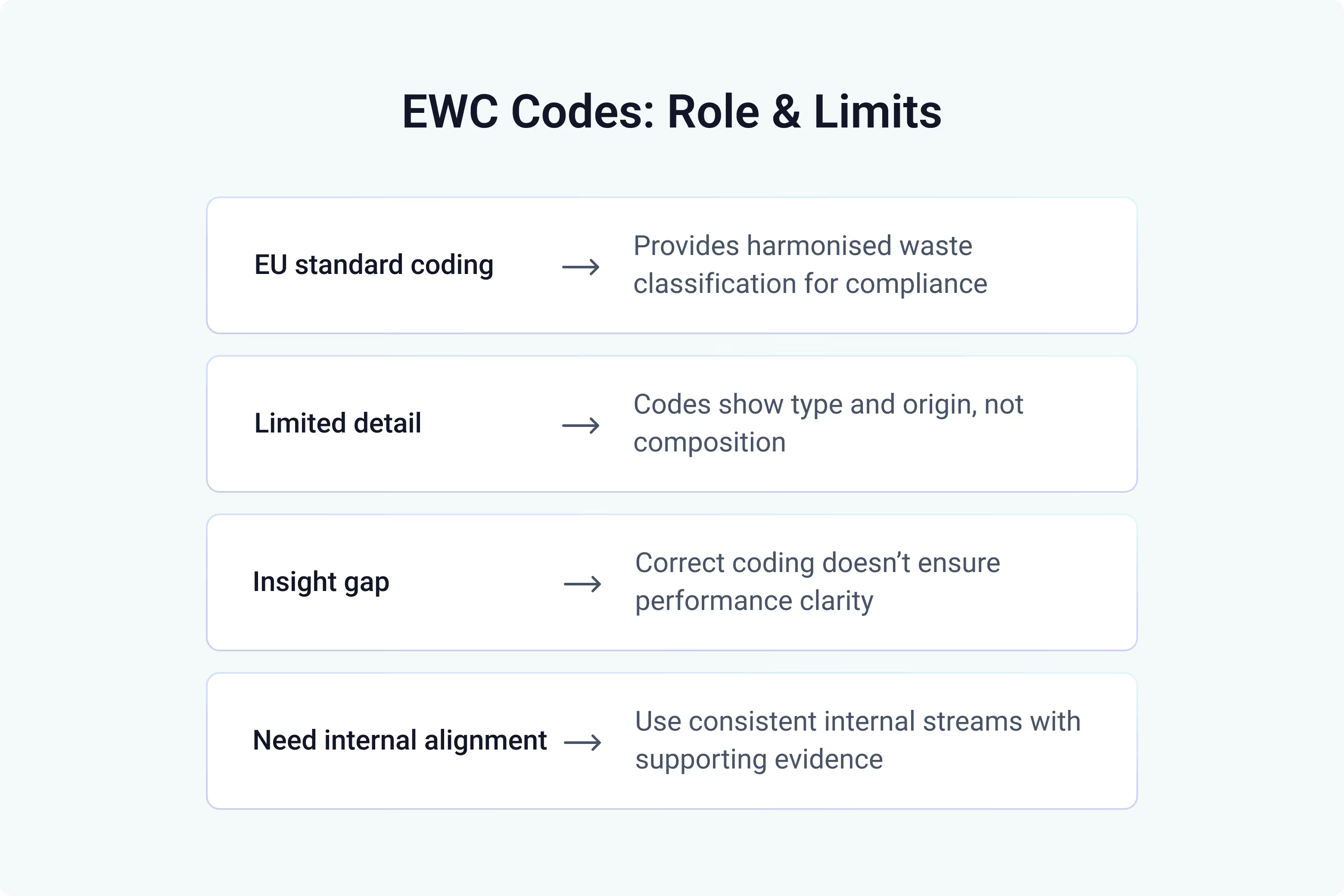
The fix isn’t to replace EWC/LoW, but to complement it: define internal waste streams consistently across sites, map them to EWC for compliance, and support that classification with evidence such as invoices and transport documents so results remain auditable.
For multi-site enterprises, that gap matters. You can be “classified correctly” and still struggle to explain why similar-looking streams behave differently in €/tonne, emissions, or treatment outcomes. The fix isn’t to replace EWC/LoW, but to complement it: define internal waste streams consistently across sites, map them to EWC for compliance, and through evidence (invoices, bills of lading) find the material or true composition of the waste.
Where Waste Analysis Breaks Down at Scale
Across large organisations, waste analysis typically breaks down in predictable ways.
Data is spread across many systems and formats, making it difficult to establish a single source of truth. Waste categories are defined differently by site or contractor, which undermines comparison. Visibility into the downstream process is limited, especially once waste leaves the facility. And cost data is often disconnected from treatment outcomes.
These issues make it hard to identify inefficiencies such as:
- unnecessary transport and transportation distances
- excessive inventory and idle time linked to waste accumulation
- wasted time spent reconciling data rather than eliminating waste
Instead of supporting decision making, waste analysis becomes a retrospective exercise driven by reporting deadlines.
From Totals to Streams: What Enterprise Waste Analysis Focuses On
Enterprise-grade waste analysis shifts the focus from aggregate figures to waste streams.
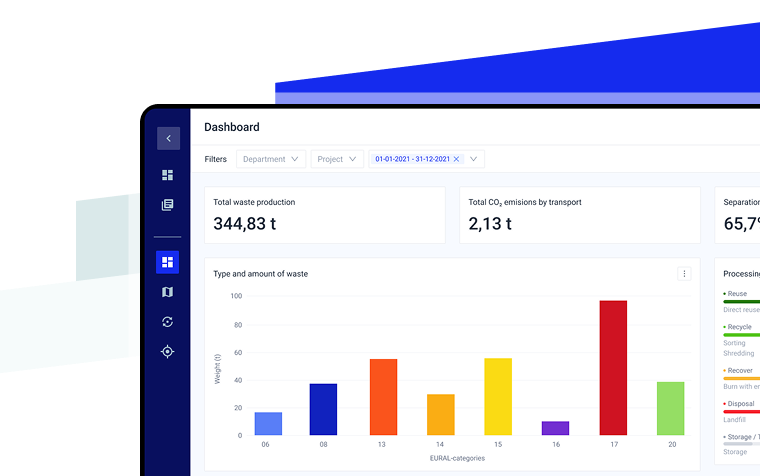
By analysing waste at stream level, organisations can see which materials drive extra costs, which streams are suitable for higher-value recovery, and where hazardous waste or disposal risk is concentrated. This level of insight is essential for identifying opportunities to reduce waste, improve efficiency, and recover more value from raw materials.
Linking Waste Analysis to Cost, Compliance, and Improvement
Once waste data is verified and structured, its value increases significantly.
Waste analysis enables organisations to:
- compare €/tonne across sites and contractors
- analyse recycling and recovery performance by waste category
- understand the cost and emissions impact of different treatment routes
- identify opportunities to reduce transport, handling, and disposal
- support continuous improvement initiatives across operations
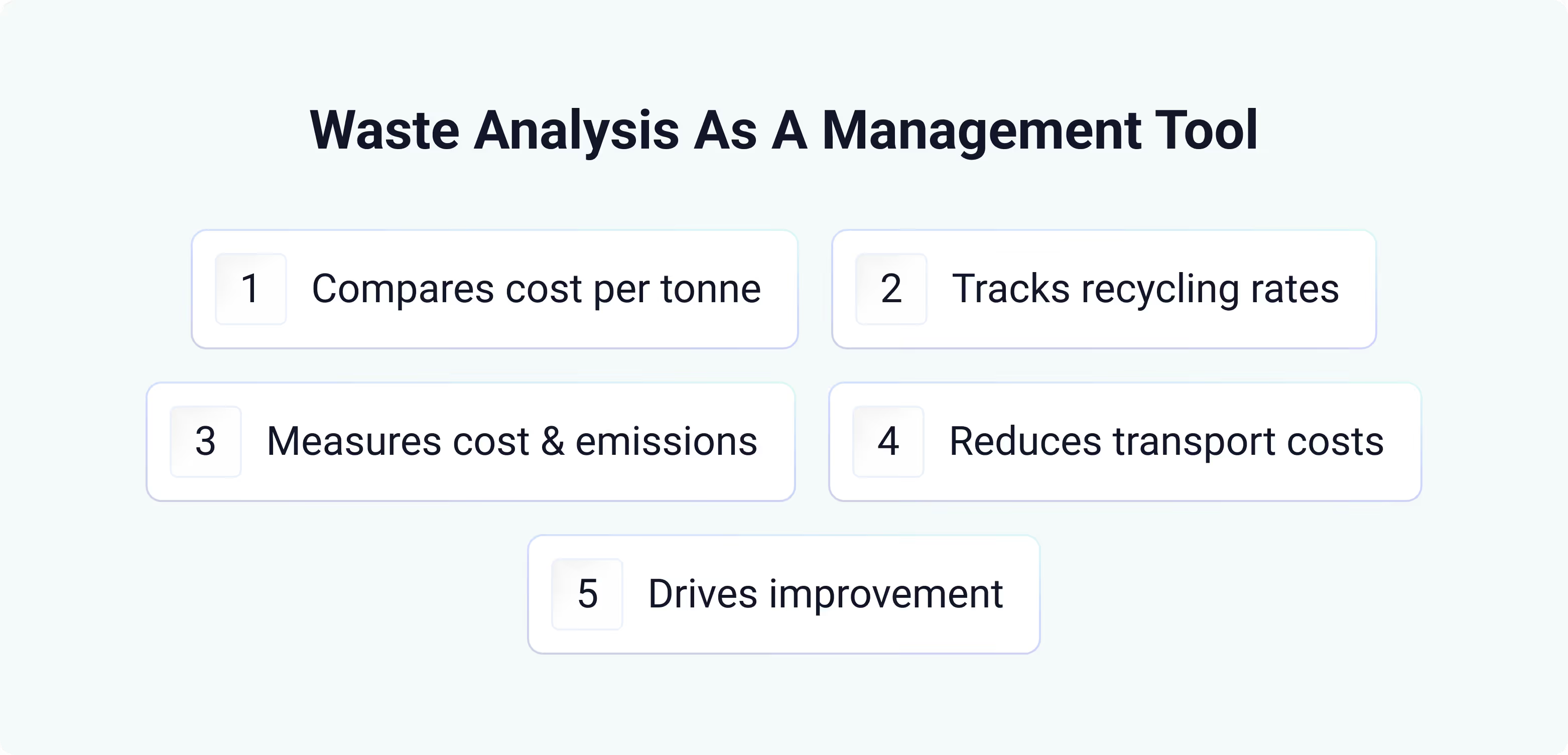
This is where waste analysis becomes a management tool rather than a compliance burden.
What a Waste Analysis Plan Looks Like in Practice
To make waste analysis repeatable, enterprises need a waste analysis plan. This defines how waste analysis is performed consistently across the organisation, rather than relying on ad hoc reviews.
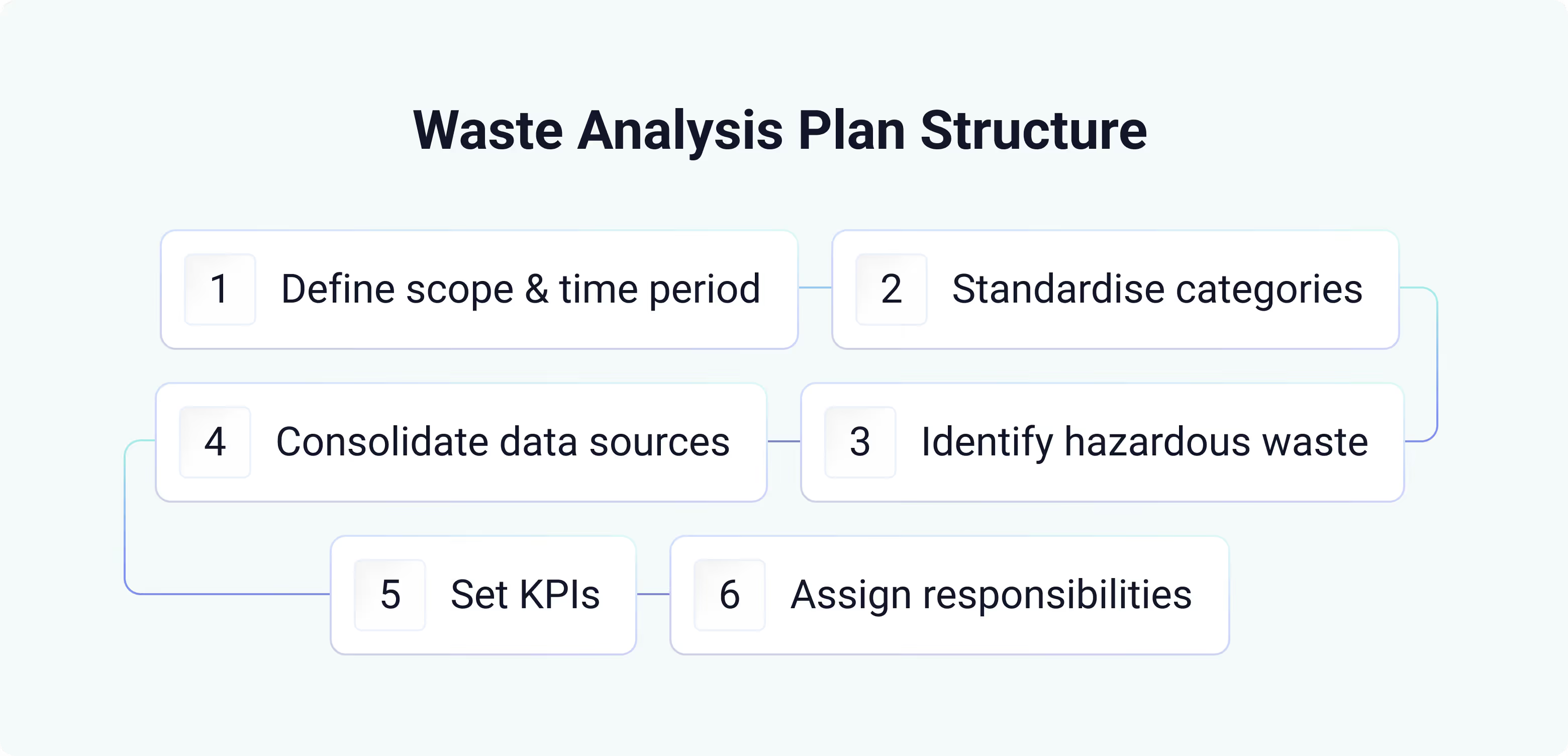
A typical waste analysis plan covers:
- the scope of analysis (sites, facilities, time period)
- standard waste categories and stream definitions
- hazardous waste identification
- data sources and information required for complete overview
- KPIs used for review and decision making
- roles and responsibilities across the organisation
Without a plan, waste analysis tends to be reactive and person-dependent. With one, it becomes part of normal business operations.
Using a SWOT Analysis for Waste Management
Once reliable analysis is in place, a SWOT analysis for waste management can help prioritise action. Below are some examples of what you might place in each quadrant of your SWOT analysis, depending on the state of waste management in your organisation.
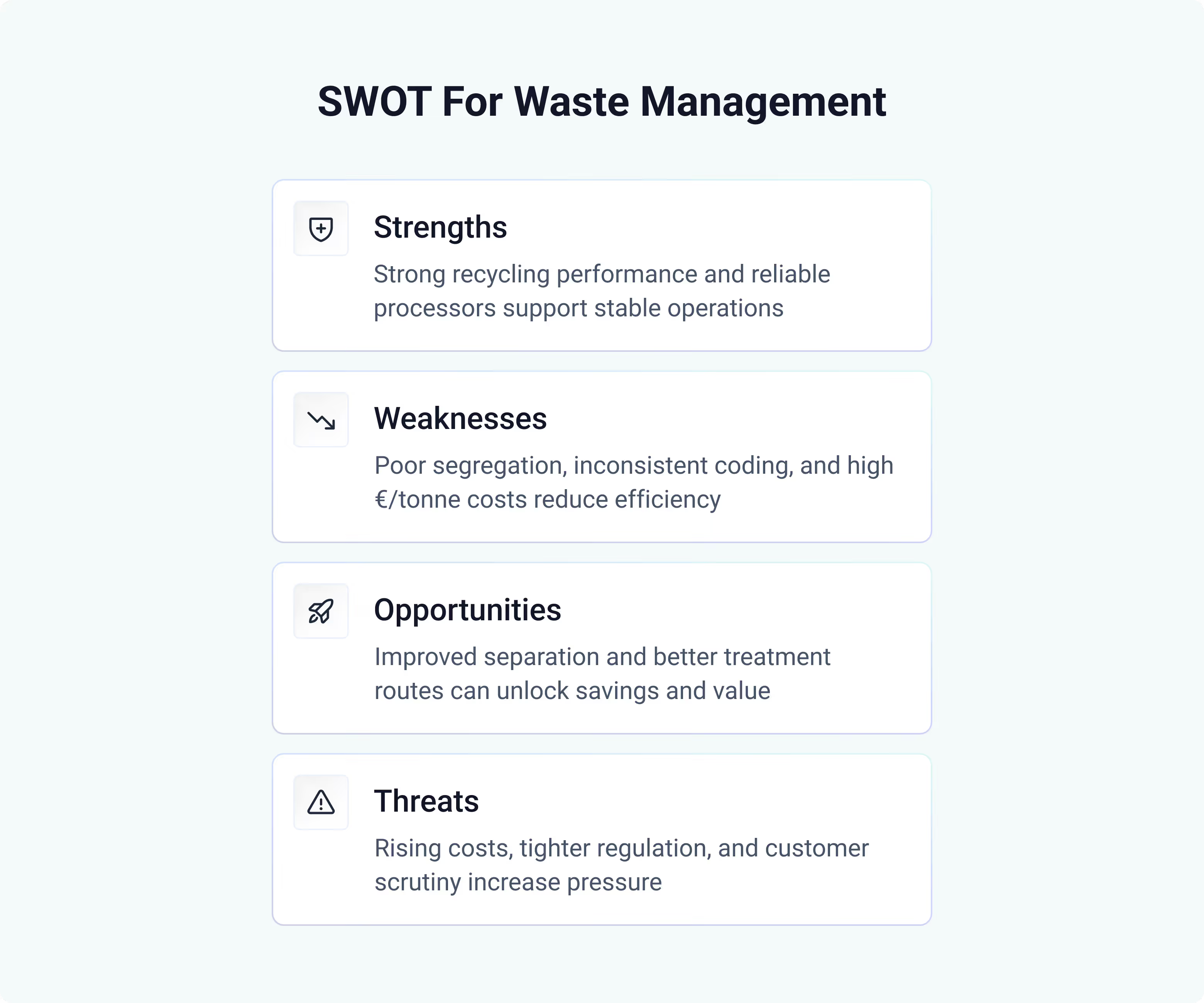
Strengths
- high recycling performance in specific waste categories
- established processors with high reliability and performance
Weaknesses
- mixed or poorly segregated waste
- inconsistent categorising waste across sites
- higher-than-expected €/tonne or transport costs
Opportunities
- better waste treatment alternatives
- improved separation within production and office areas
Threats
- rising disposal and transport costs
- tighter regulation and inspection pressure
- increasing customer requires for proof of circularity
Used correctly, this moves waste analysis from observation to strategy.
Waste Analysis and Reducing Operational Inefficiencies
By making waste streams visible and comparable across sites, waste analysis highlights where materials are being lost, mishandled, or routed inefficiently. These signals often point to broader operational issues — such as poorly separated waste, avoidable handling steps, or accumulation of materials that increase storage, transport, and disposal costs.
Rather than relying on assumptions or isolated observations, teams can use waste analysis to prioritise improvements based on evidence. In this way, waste analysis supports operational improvement efforts by grounding them in verified data, without replacing existing process or efficiency methodologies.
From Reporting Obligation to More Value
As regulatory pressure increases and margins tighten, waste management can no longer be treated as a background activity. Waste represents cost, risk, and opportunity — all at once.
Waste analysis, when based on verified data and a clear plan, enables organisations to reduce extra costs, strengthen compliance, and recover more value from materials that would otherwise be lost. It supports better decision making across sustainability, procurement, and operations, while creating a defensible foundation for reporting and audits.
With geoFluxus, waste analysis becomes continuous, auditable, and decision-ready across every site and stream — turning fragmented data into actionable insight.
FAQs
What is waste analysis in an enterprise setting?
Waste analysis is the structured evaluation of waste streams across an organisation to understand costs, treatment routes, risks, and improvement opportunities. It goes beyond reporting totals and supports waste management decisions.
How is a waste analysis plan different from a waste report?
A waste report shows what happened. A waste analysis plan defines how waste is analysed on an ongoing basis, including waste categories, data sources, KPIs, and review cycles.
Why are EWC codes not enough for waste analysis?
EWC codes support compliance but often lack detail on material composition and treatment suitability. Enterprise waste analysis adds internal stream definitions to enable meaningful comparison and optimisation.
How does waste analysis help reduce costs?
By analysing €/tonne, treatment routes, and transport distances at stream level, organisations can identify inefficiencies, eliminate unnecessary movement, and reduce disposal and handling costs.
Is waste analysis only relevant for manufacturing sites?
No. Waste analysis also covers office supplies, logistics waste, service activities, and support processes, ensuring no material flows or risks are overlooked.