
“Over the years we’ve invested significantly in our field data team - focusing on producing trusted ratings. While this ensures the accuracy of our Ratings, it doesn’t allow the scale across the thousands of projects that buyers are considering.”

For more information on carbon credit procurement trends, read our "Key Takeaways for 2025" article. We share five, data-backed tips to improve your procurement strategy.
One more thing: Connect to Supply customers also get access to the rest of Sylvera's tools. That means you can easily see project ratings and evaluate an individual project's strengths, procure quality carbon credits, and even monitor project activity (particularly if you’ve invested at the pre-issuance stage.)
Book a free demo of Sylvera to see our platform's procurement and reporting features in action.
Why SVHCs Matter for Enterprises in 2025
For many large organisations in the EU, Substances of Very High Concern (SVHCs) have moved from a niche chemical compliance topic to a board-level data and reporting issue. The reason is simple: regulatory requirements are tightening, and they now extend far beyond safety data sheets or product declarations.
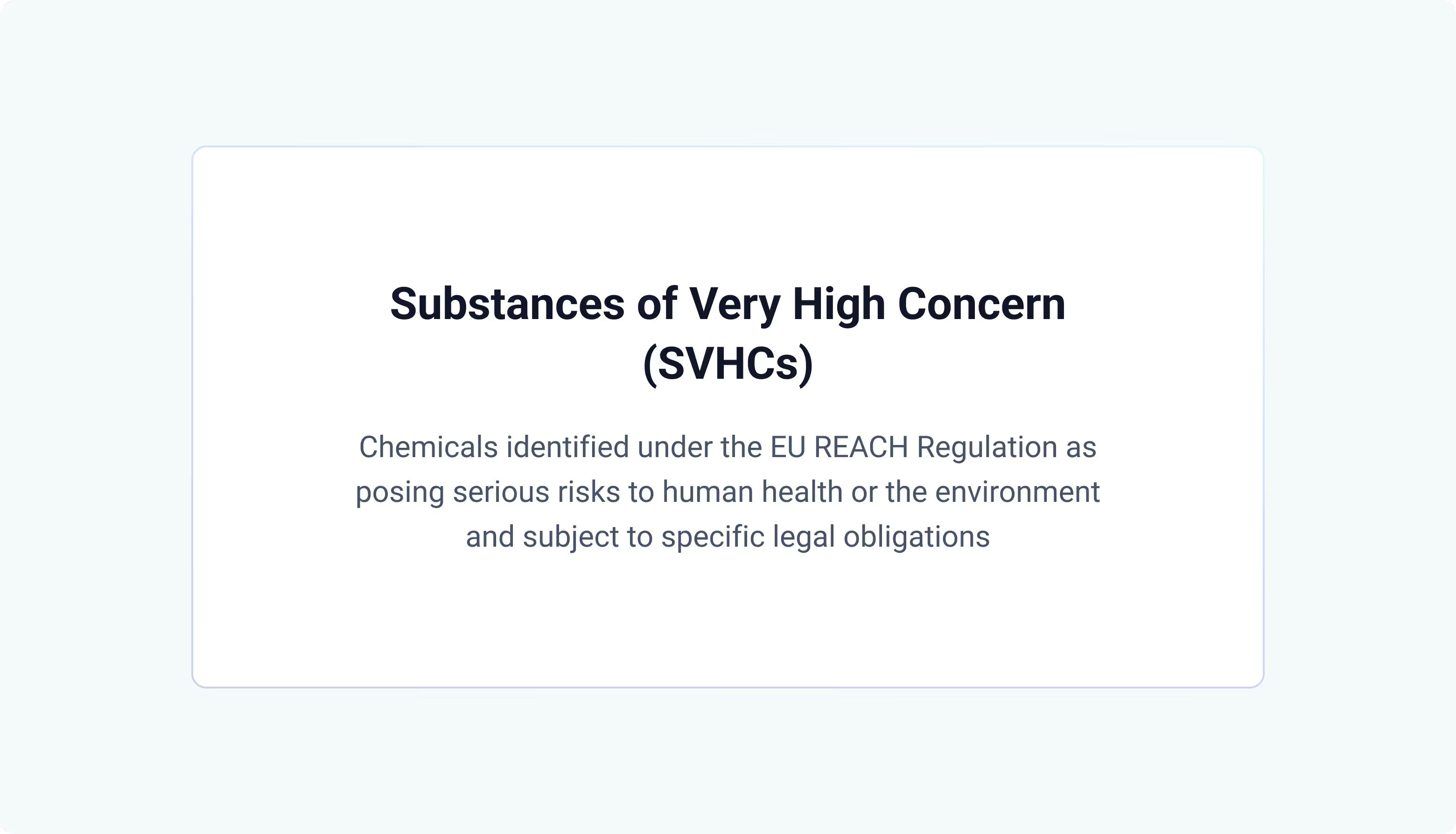
Under the REACH Regulation, companies in the EU are required to identify and communicate the presence of SVHCs in articles and substances throughout the supply chain. This establishes a baseline for transparency around chemical substances that pose serious risks to human health or the environment.
Building on this EU framework, the Netherlands has introduced additional reporting requirements under the Besluit Melden. Dutch companies must report to waste processors whether Zeer Zorgwekkende Stoffen (ZZS) are present in their waste. While the two categories are closely related, not all ZZS qualify as SVHCs under REACH, whereas all SVHCs are considered ZZS in the Dutch context. As a result, SVHCs have become directly relevant in Dutch waste reporting and treatment decisions.
Across both the EU compliance context and the Dutch waste context, SVHCs are challenging because they rarely sit neatly in one place. They are embedded across materials, products, residues, and waste flows. For enterprises operating multiple sites and complex supplier networks, managing SVHC obligations has therefore become a data integration and traceability challenge rather than a purely chemical one.
What Are Substances of Very High Concern (SVHC)?
The REACH Definition (EU)
Substances of Very High Concern are defined under Regulation (EC) No 1907/2006 — better known as REACH. SVHCs are chemicals that have been identified as posing serious risks to human health or the environment and therefore require special attention across their entire lifecycle.
The European Chemicals Agency (ECHA) maintains the SVHC Candidate List, which is updated twice a year. Inclusion on this list triggers specific legal obligations related to communication, notification, and waste handling.
A substance can be identified as an SVHC when it meets one or more of the following criteria. It may be carcinogenic, mutagenic, or toxic to reproduction (CMR). It may be persistent, bioaccumulative, and toxic (PBT), or very persistent and very bioaccumulative (vPvB). It may cause endocrine disruption. Finally, substances of equivalent concern can also qualify, even if they do not fall neatly into the other categories.
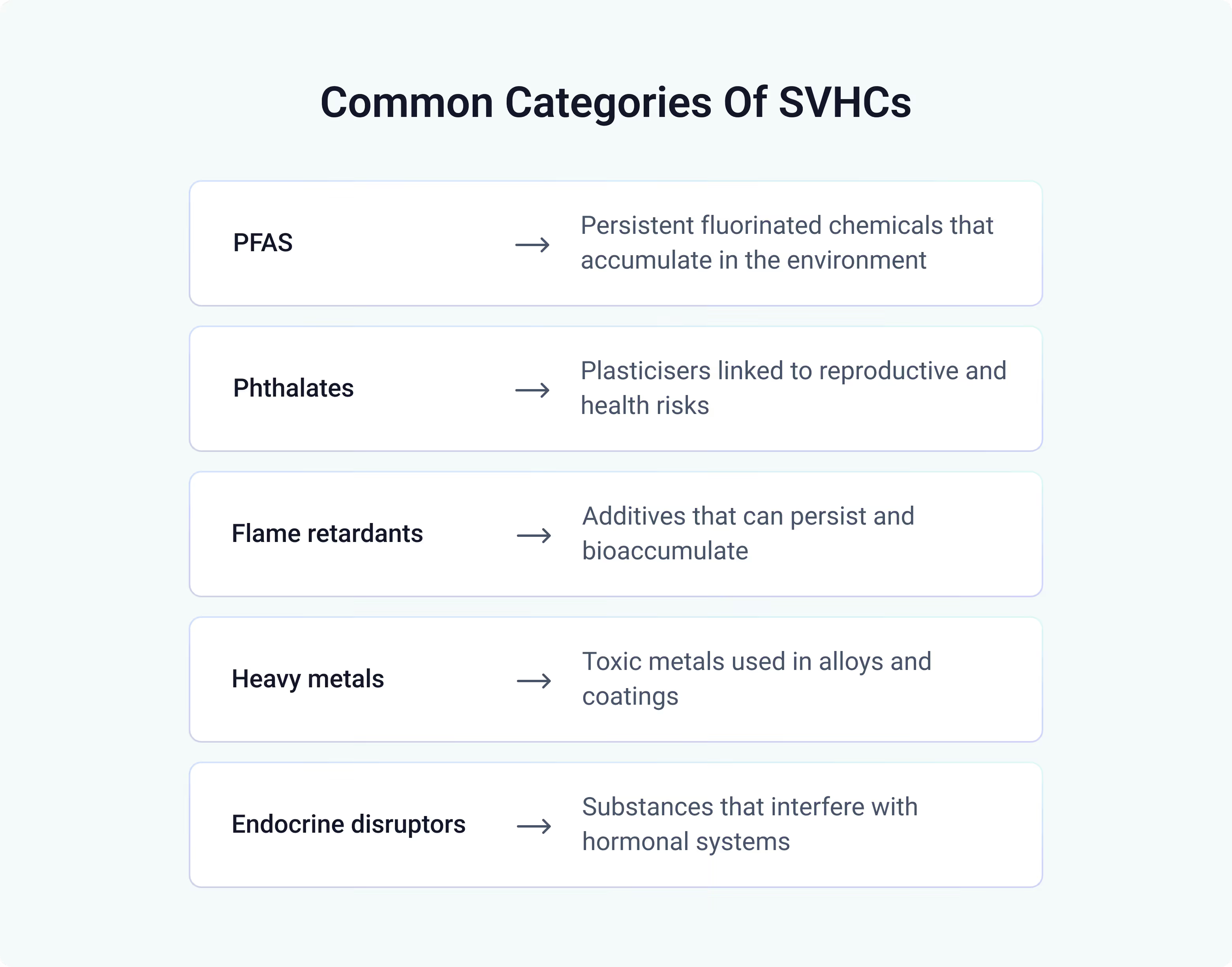
Examples of Common SVHC Categories
In practice, SVHCs include substances that many enterprises encounter daily. PFAS such as PFOS and PFOA are found in coatings, firefighting foams, and industrial processes. Phthalates like DEHP and DBP are common plasticisers in PVC and flexible materials. Flame retardants such as HBCDD appear in insulation materials and electronics. Heavy metals like lead compounds or chromium VI are still present in certain alloys, pigments, and surface treatments. Endocrine disruptors such as BPA are used in plastics, resins, and thermal paper.
Crucially, SVHCs do not only exist as pure chemicals. They are embedded in articles, packaging, electronics, textiles, adhesives, coatings, and composites — and they persist when these materials become waste. This is what makes enterprise-wide tracking so complex.
What Companies Must Do When SVHCs Enter Their Operations
At product level, articles placed on the EU market that contain SVHCs above 0.1% weight by weight must be registered in the SCIP database. The SCIP database is a central EU register of articles containing SVHCs, created to ensure that information about substances of concern remains accessible when products reach end of life and enter waste treatment.
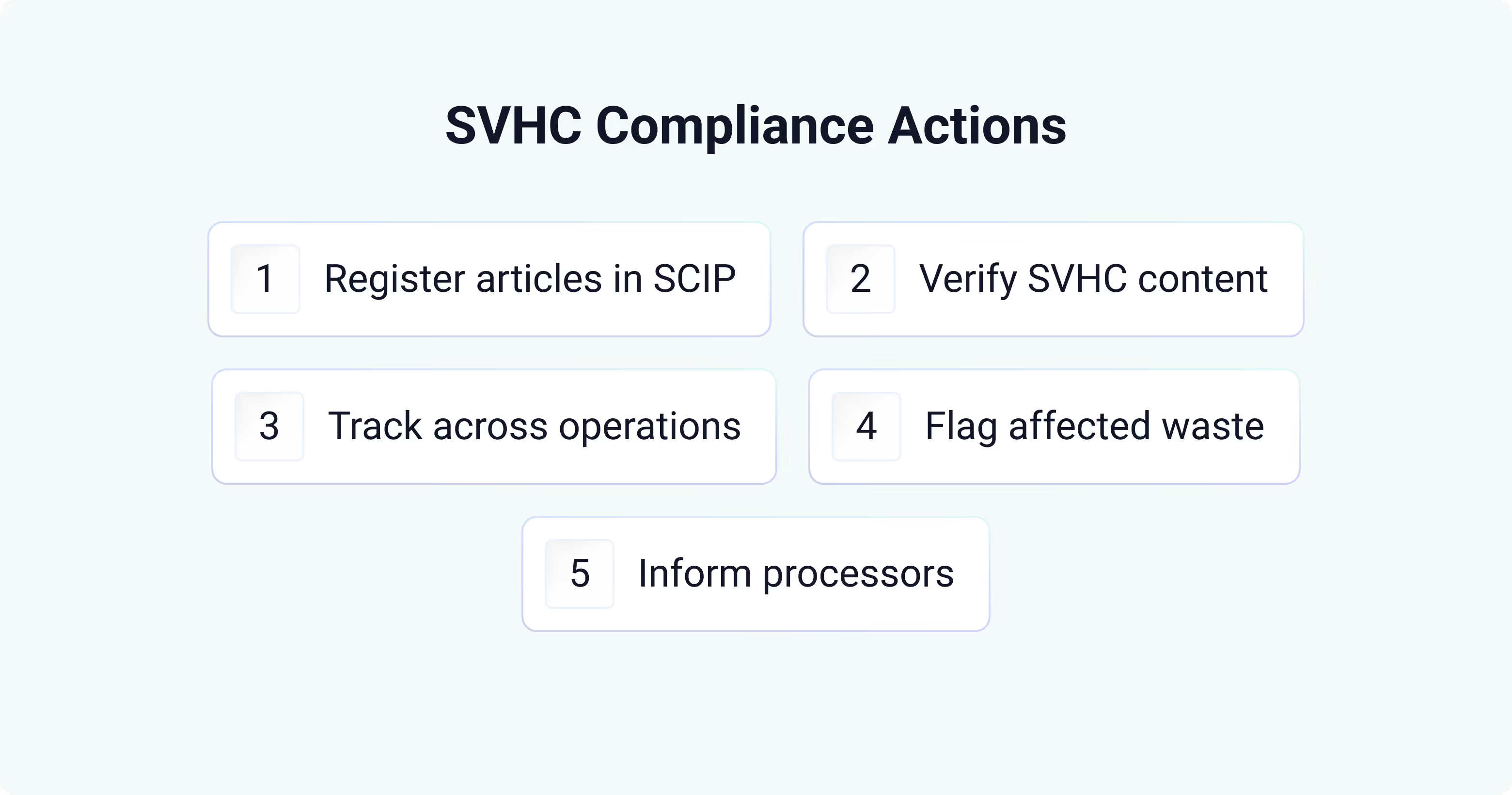
That product-level obligation carries through into operations. When SVHCs appear in a company’s supply chain or manufacturing process, companies must ensure that information about these substances remains available as materials move from procurement and production into waste. When purchasing materials or components, companies can use the SCIP database to check whether these contain SVHCs. Tracking this information across the supply chain is essential not only to understand which products contain SVHCs, but also to identify which waste streams they end up in, including residues or waste that has come into contact with them.
In the Netherlands, companies must communicate this information to their waste handlers so that processors can apply the correct treatment and prevent contamination of recycling or other waste streams.
SVHCs and the Circular Economy — Why They Are a Barrier and a Data Problem
A circular economy depends on keeping materials in high-value loops for as long as possible. That logic breaks down when substances of very high concern are involved. SVHCs introduce a practical constraint into reuse, recycling, and material recovery, because once an SVHC is present, the options for what can be done with a material narrow quickly.
Materials that contain SVHCs are often considered contaminated. In many cases, they cannot be safely recycled or reused without risking the spread of unwanted substances into new products or secondary materials. For waste processors, this makes information critical. They need to know whether SVHCs are present in incoming waste in order to apply the correct treatment, avoid unsafe processing, and prevent contamination of otherwise recyclable streams. Without that information, waste processors can not guarantee clean recycling.
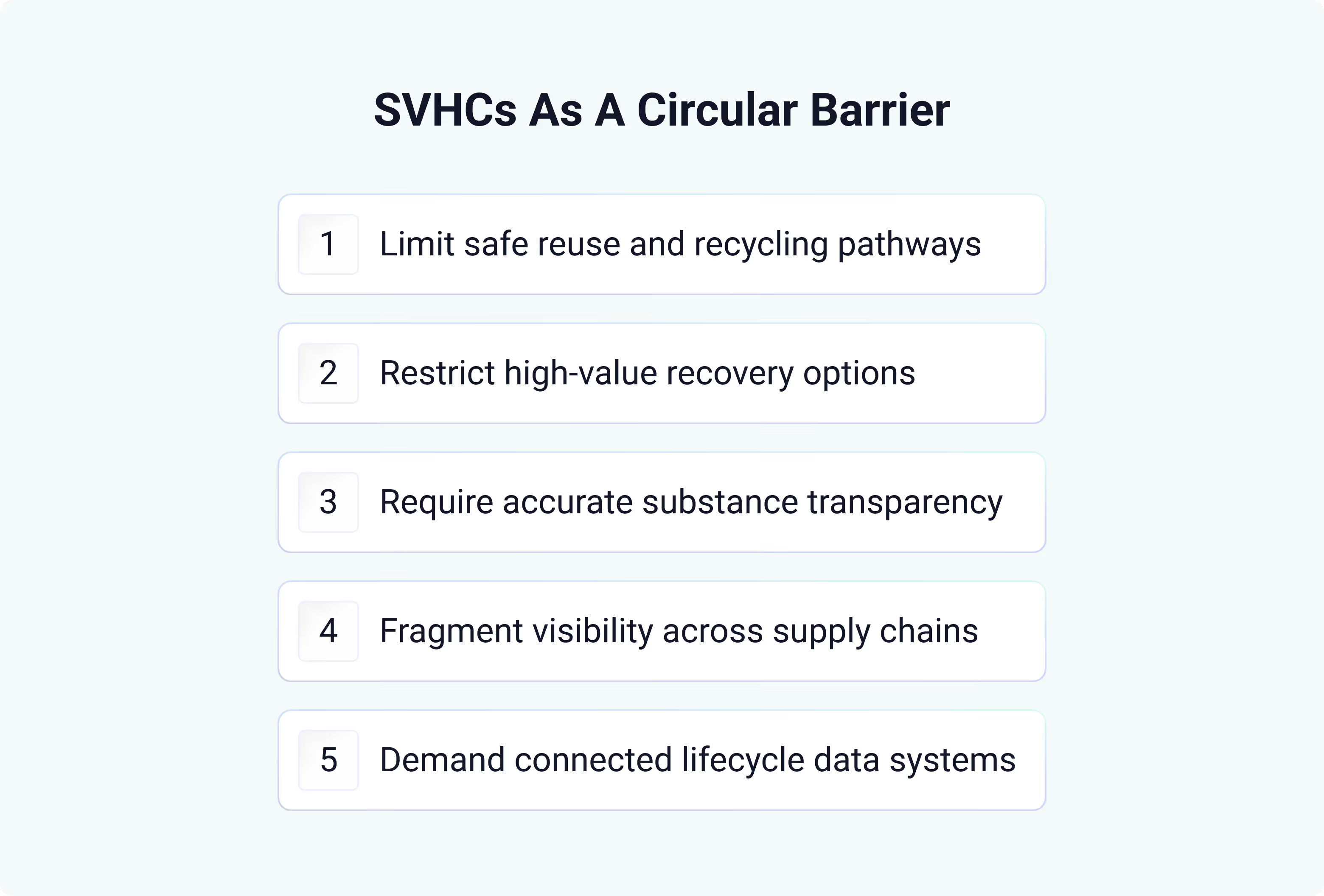
SVHC information is frequently difficult to find, incomplete, or disconnected from the data companies use to manage materials and waste. Product composition details sit with suppliers, procurement systems track what was bought but may not track what substances it contains, and waste documentation describes quantities and codes without clear links back to material content.
This lack of visibility has direct consequences for decision-making. Without reliable SVHC data, companies struggle to make the required waste declarations and to ensure that waste is handled correctly. At the same time, they lack the insight needed to make informed decisions about material substitution, product design changes, or process adjustments that could reduce the presence of SVHCs in the first place. Managing SVHCs effectively therefore requires more than compliance at the end of the pipe. It requires connecting procurement data, product composition, and waste information so that substances of concern remain visible throughout the lifecycle, rather than appearing only when materials become waste.
Best Practices for Managing SVHCs in Large Enterprises
When tackling SVHCs at an organisational level, it helps to focus on a small number of practical foundations. The following best practices address both compliance and operational reality in large, multi-site environments.
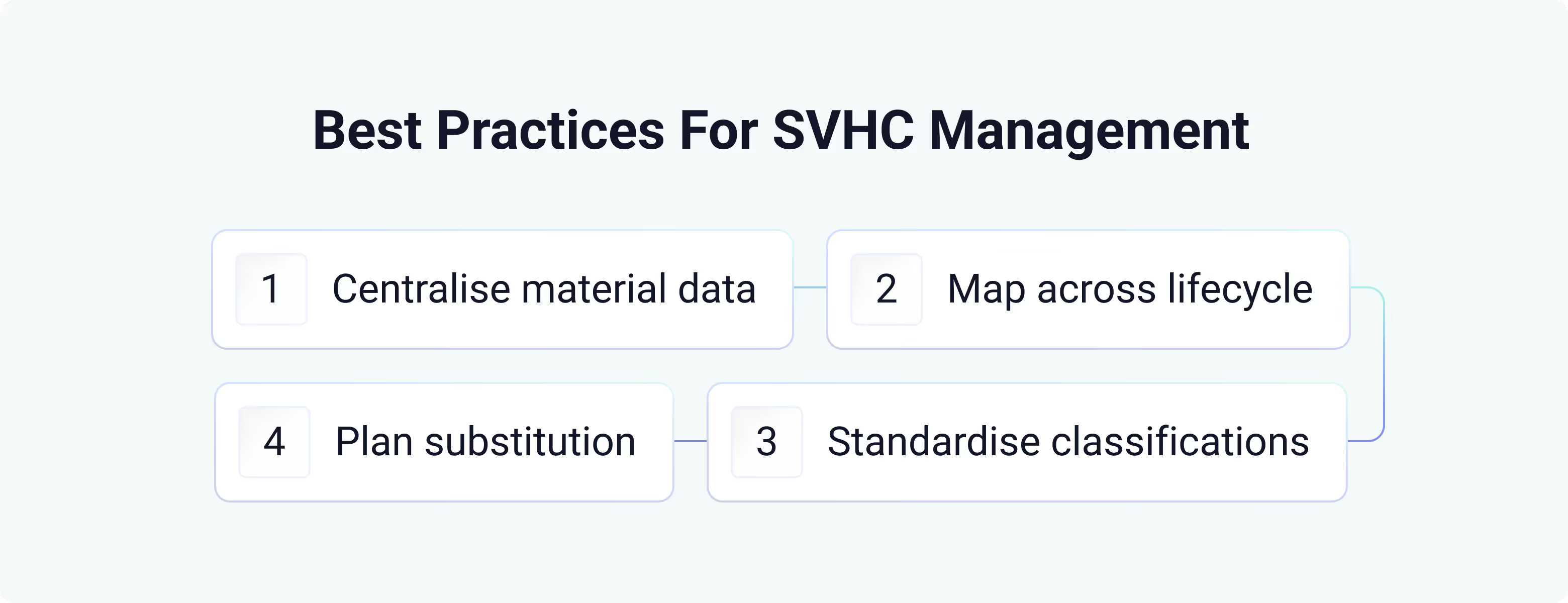
1. Centralise supplier and material data
Effective SVHC management starts with a single, reliable source of truth for supplier declarations, safety data sheets, and material specifications. Centralisation reduces the risk of outdated or inconsistent information and makes it possible to respond when the SVHC Candidate List is updated, rather than relying on static documents.
2. Map SVHCs from procurement through end of life
Organisations benefit from tracing materials from procurement into products and further into waste streams and treatment routes. This visibility helps identify where SVHC-containing materials end up, which waste streams are affected, and where risks arise across the lifecycle.
3. Standardisation and documentation
Align definitions and classifications across procurement, production, and QHSE so that all functions are working with the same terminology. Consistent coding and documentation prevent SVHC-related risks from being obscured by generic or mismatched classifications.
4. Build reduction and substitution plans
Substitution is a core objective of REACH. With reliable data, organisations can identify where non-SVHC alternatives exist — such as PFAS-free coatings, alternative flame retardants, or safer plasticisers — and prioritise changes that support both compliance and circularity goals.
How geoFluxus Helps Companies Track SVHCs Across Waste and Circular Flows
GeoFluxus helps organisations gain visibility into where SVHCs appear in their waste and how they are managed by structuring waste data across sites and processors. This makes it easier to identify which materials are present in waste streams and where SVHCs are likely to occur, to check whether these waste streams are classified and treated in line with legal requirements, and to highlight data gaps or unusual patterns that indicate where further investigation is needed to better understand and manage the presence of SVHCs in waste.
(Book a Demo → https://www.geofluxus.com/book-a-demo)
Conclusion — SVHCs Are a Compliance Duty, a Data Challenge, and a Circularity Barrier
SVHCs affect procurement, product composition, waste treatment, and circular performance. With stricter reporting and waste obligations taking effect, companies need to manage SVHCs proactively rather than addressing them only at the waste stage. Reliable and connected data makes it possible to identify where SVHCs are present, ensure waste is handled correctly, and support decisions on reduction or substitution earlier in the lifecycle.
FAQs
What are substances of concern and substances of very high concern?
Substances of concern is a broad term for chemical substances that may pose risks to human health or the environment. Substances of Very High Concern (SVHCs) are a specific group defined under the REACH Regulation because there is sufficient scientific evidence that they can cause probable serious effects, such as carcinogenic, mutagenic, or toxic effects, endocrine disrupting properties, or irreversible adverse health effects. SVHCs are identified at EU level by the European Chemicals Agency (ECHA) and are included on the Candidate List of substances of very high concern, which triggers immediate legal obligations for companies placing such substances or articles on the EU market.
What does “high concern chemical” mean?
A “high concern” chemical refers to substances that regulators consider especially problematic due to their effects on human health or the environment. This includes substances with carcinogenic, mutagenic or toxic properties, endocrine disruptors, or chemicals linked to long-term or irreversible effects. In EU regulatory practice, high concern SVHCs are identified based on scientific evidence and assessed by ECHA and the Member State Committee, often on a case-by-case basis.
What happens when a supplier uses an SVHC above 0.1%?
When an SVHC is present in an article above 0.1% weight by weight, companies in the supply chain must communicate this information to downstream users. Consumers also have the right to request sufficient information to allow safe use of the article. In addition, companies must submit information to the SCIP database so that waste operators and other interested parties can identify substances of very high concern when products reach end of life. These legal obligations apply regardless of quantities totaling one tonne and cover consumer products as well as industrial articles.
How often is the SVHC Candidate List updated?
The Candidate List of substances of very high concern is updated twice a year by the European Chemicals Agency, following evaluation by ECHA and agreement within the Member State Committee. New inclusions are based on updated scientific evidence and can lead to immediate legal obligations for companies. For this reason, companies operating in EU Member States need to monitor updates regularly and assess whether newly listed substances are present in their substances, articles, or supply chains.