


“Over the years we’ve invested significantly in our field data team - focusing on producing trusted ratings. While this ensures the accuracy of our Ratings, it doesn’t allow the scale across the thousands of projects that buyers are considering.”

For more information on carbon credit procurement trends, read our "Key Takeaways for 2025" article. We share five, data-backed tips to improve your procurement strategy.
One more thing: Connect to Supply customers also get access to the rest of Sylvera's tools. That means you can easily see project ratings and evaluate an individual project's strengths, procure quality carbon credits, and even monitor project activity (particularly if you’ve invested at the pre-issuance stage.)
Book a free demo of Sylvera to see our platform's procurement and reporting features in action.
Why ESG reporting conferences matter
Sustainability reporting has become a recurring operational task rather than a one-off disclosure exercise. For large organisations, ESG reporting depends on multiple teams, systems, and sources of data, often spread across regions and business units.
At the same time, regulatory requirements and external scrutiny have increased. Reporting frameworks are clearer than they were a few years ago, but practical implementation remains uneven. Many organisations still struggle with fragmented ESG data, unclear ownership, and manual reporting workflows. Peer comparison is often most useful when it reveals how reporting ownership, governance, and data workflows are structured in practice.
An ESG reporting conference can help when it provides clarity on how others are addressing these challenges in practice. The most useful events explain how companies organise governance, manage data, and prepare disclosures that stand up to internal review and external assurance. The most useful sessions focus on reporting workflows, data governance, and assurance preparation rather than high-level strategy.
In practice, value comes when teams translate conference insights into changes in data ownership, controls, or reporting processes, ensuring compliance and transparency.
How To Decide Whether an ESG Reporting Conference is Worth Attending
Before committing time and budget, it helps to be clear about your objective. In person conferences offer unique opportunities for networking and deeper engagement, which can be especially valuable for building relationships and sharing best practices in ESG reporting.
If your main challenge is regulatory interpretation, look for conferences with sessions on reporting frameworks, disclosures, and compliance challenges. If the challenge is execution, prioritise events that cover ESG data, systems, governance, and assurance readiness. If alignment across teams is the issue, choose conferences where sustainability, finance, risk management, and IT are all represented.
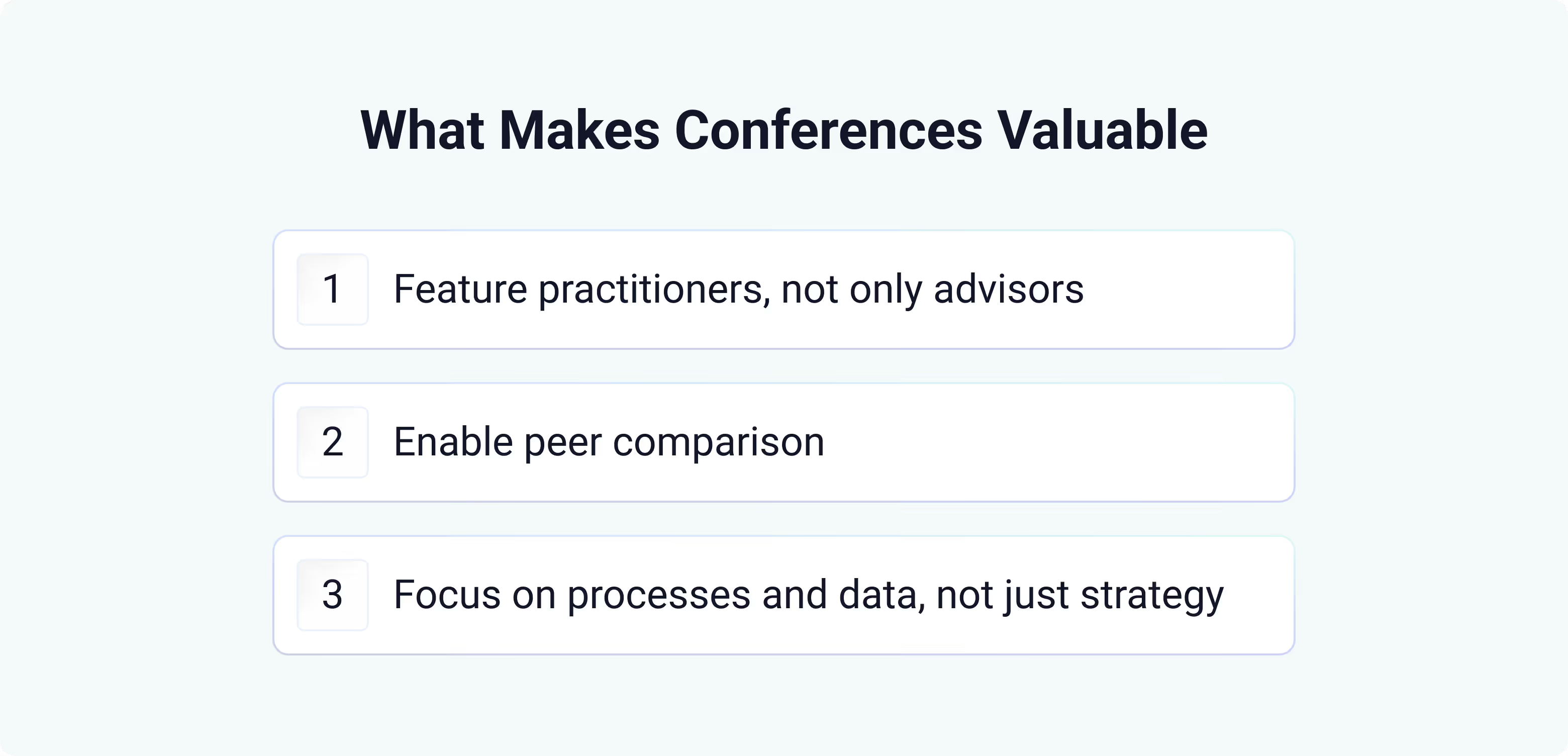
In practice, conferences tend to be most valuable when they:
- include speakers from companies already reporting, not only advisors
- allow comparison with industry peers
- include sessions focused on processes, controls, or data, not just strategy
Additionally, consider the role of government and policymakers, as their participation in ESG reporting conferences can shape standards and expectations for organizations worldwide.
The events below are selected because they tend to address reporting-relevant topics, even when their scope is broader. C-Suite executives are increasingly targeted as attendees for their focus on long-term value and risk management.
ESG reporting conferences to watch in 2026
GreenBiz 26
Date: 17–19 February 2026
Location: Phoenix, AZ, USA
GreenBiz is widely attended by corporate sustainability teams. While not all sessions focus on reporting, many address how sustainability programmes are structured, how ESG data is handled internally, and how reporting connects to wider business processes. The event also features workshops that provide hands-on learning and professional development opportunities for attendees.
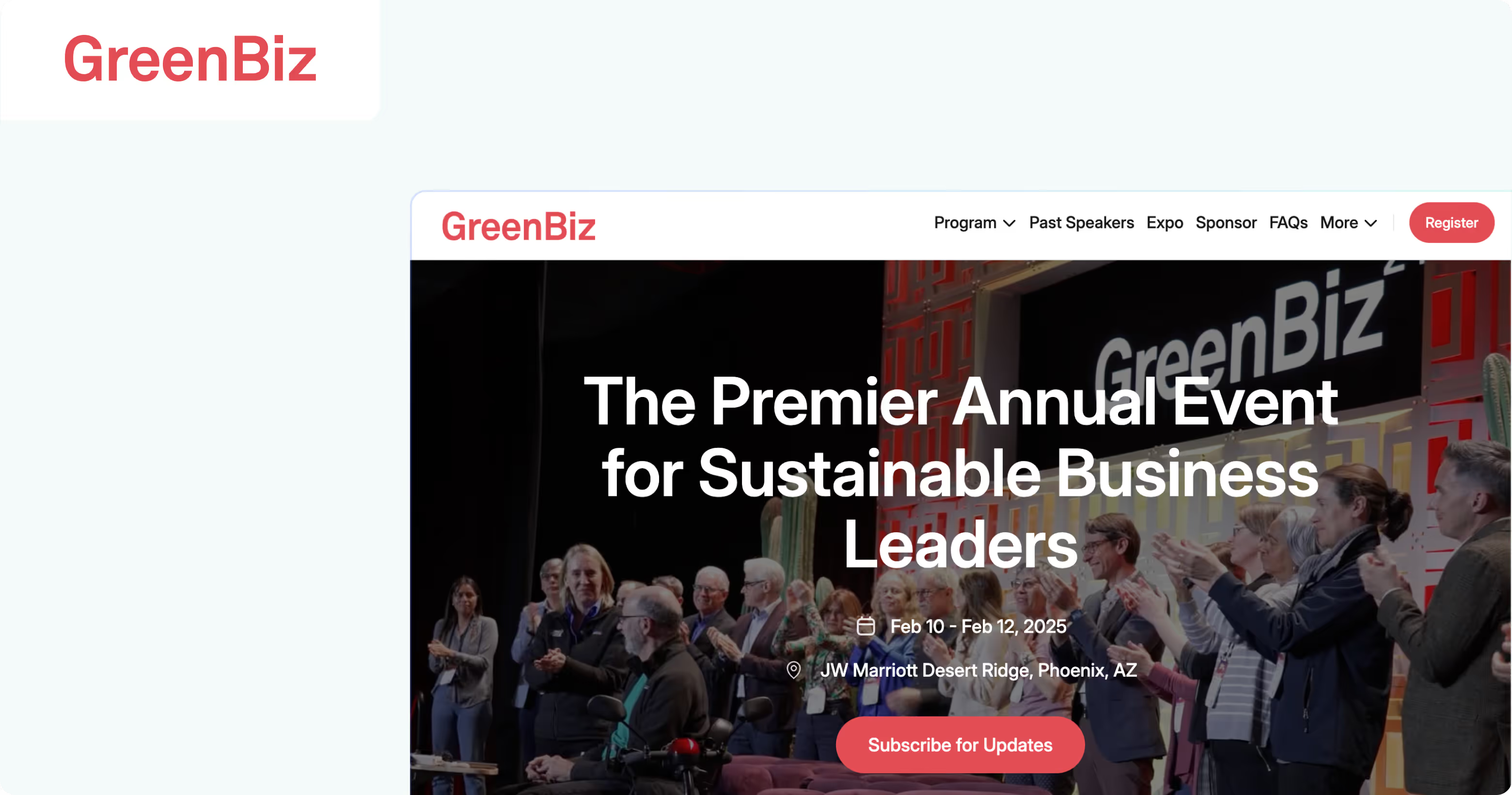
Reporting leaders often attend to benchmark organisational models and understand how peers manage sustainability data and internal coordination.
Best suited for sustainability teams and reporting programme owners.
Circular Valley Convention 2026
Location: Düsseldorf, Germany
Date: 11–12 March 2026
Circular Valley Convention sits at the intersection of circular economy policy, industry implementation, and data-driven decision-making. While not a pure reporting conference, it is highly relevant for organisations reporting on material flows, waste prevention, and circularity outcomes under CSRD and ESRS.
.avif)
Sessions often focus on how circular strategies translate into measurable performance, including material recovery, secondary raw materials, and system-level transformation. For reporting teams, the value lies in understanding how circular economy claims are being operationalised — and what data is required to support them credibly.
Best suited for: sustainability teams, circularity leads, and reporting professionals responsible for waste, materials, and resource use disclosures.
Verdantix Transform
Date: 17–19 March 2026
Location: Amsterdam, Netherlands
Verdantix Transform is particularly relevant for organisations dealing with ESG data complexity. The conference focuses on digital transformation across ESG, EHS, and sustainability reporting.
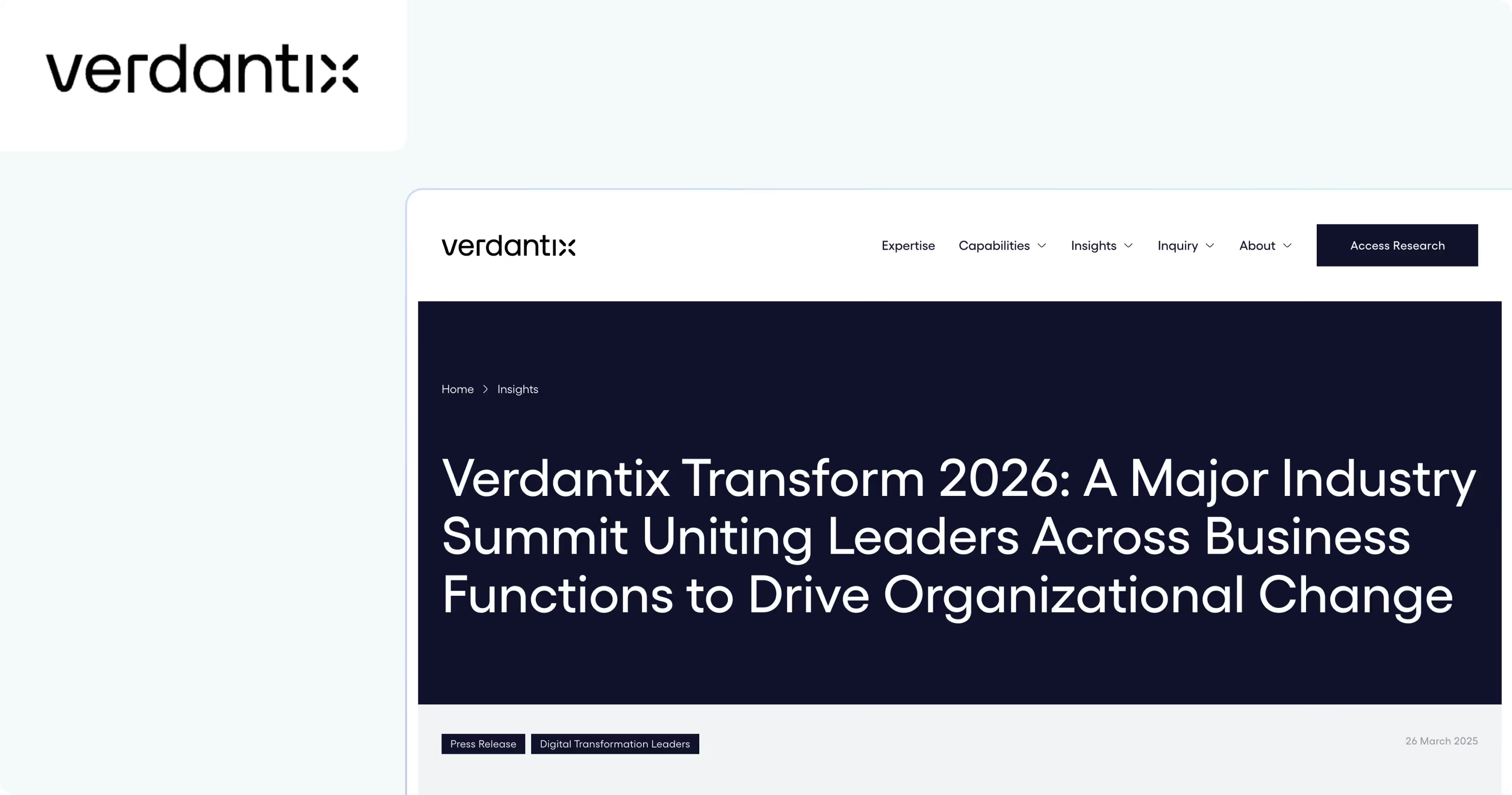
Sessions typically explore how companies select sustainability software, design data architectures, and maintain governance as reporting requirements expand. The conference also addresses the tools needed to effectively measure, collect, analyze, and report ESG data, highlighting technology, automation, and practical solutions for ensuring compliance and transparency in ESG disclosures.
Best suited for ESG data owners, IT leaders, and sustainability operations.
Innovation Zero World Congress
Date: 28–29 April 2026
Location: London, UK
Innovation Zero is broader than reporting, but useful for understanding which climate and sustainability initiatives are becoming operationally credible. Carbon markets are discussed as a central component of climate finance and innovation at the event, highlighting their role in facilitating low-carbon solutions and market-based approaches to reducing greenhouse gas emissions. This matters because reporting increasingly requires evidence that actions are real, measurable, and embedded in operations.
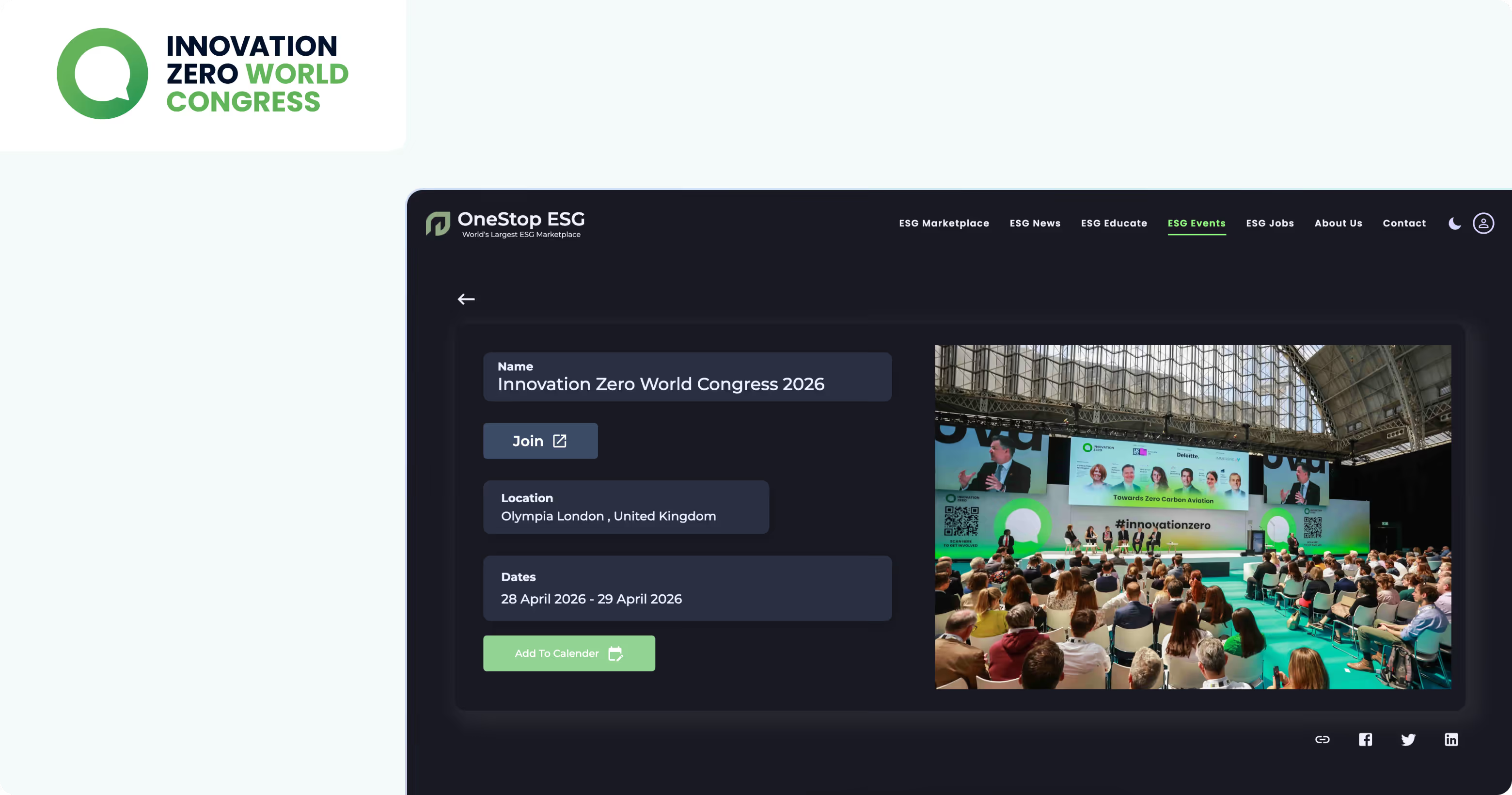
The event helps reporting teams connect disclosures to actual transition activities rather than standalone commitments.
Best suited for sustainability strategy and climate programme owners.
IFAT Munich 2026
Location: Munich, Germany
Date: 4–7 May 2026
IFAT Munich is the world’s largest trade fair for environmental technologies, with a strong focus on waste management, recycling, water, and resource efficiency. Although it is not framed as an ESG reporting conference, it is highly relevant for teams responsible for environmental data inputs.
For CSRD-aligned reporting, IFAT provides insight into how waste treatment, recovery technologies, and processing routes actually work in practice. This is particularly useful for reporting teams that need to understand downstream treatment, recovery rates, and the operational realities behind reported figures.

Best suited for: QHSE managers, waste and materials specialists, and sustainability teams responsible for environmental and circular economy data.
Financial Times Climate & Impact Summit Europe
Date: 19–20 May 2026
Location: London, UK
This summit reflects how investors and senior executives interpret sustainability disclosures. Topics often include climate risk, governance, impact measurement, and sustainable finance. Stewardship is also highlighted as a key element in responsible investing and ESG reporting, emphasizing the role of investors in guiding sustainable and ethical management.

For reporting teams, the value lies in understanding how disclosed information is read and challenged externally, which can inform materiality decisions and reporting structure.
Best suited for senior sustainability leadership, finance teams, and risk management.
Reuters Sustainability Reporting Europe
Date: 2–3 June 2026
Location: London, UK
This is one of the most directly relevant ESG reporting conferences for European organisations. It typically focuses on reporting frameworks, data quality, assurance readiness, and regulatory expectations.

Sessions often address reporting workflows, evidence management, and ways to reduce manual effort. For teams preparing for CSRD-aligned reporting, this event is often among the most applicable.
Best suited for sustainability reporting leads, CSRD project teams, and finance partners.
EU Green Week 2026
Location: Brussels, Belgium
Date: June 2026 (TBC)
EU Green Week is the European Commission’s flagship environmental policy event. While it does not offer technical reporting guidance, it provides critical context on how EU sustainability priorities, environmental regulation, and policy direction are evolving.

For ESG reporting teams, the value lies in understanding how sustainability reporting requirements are likely to develop over time, particularly around environmental impact, circular economy, and corporate transparency. It is also one of the few events where policy intent is discussed directly by regulators rather than interpreted by advisors.
Best suited for: sustainability leaders, corporate affairs, and reporting teams that need to anticipate regulatory direction rather than just current requirements.
Economist Sustainability Week US (to be confirmed)
Date: 2026 (TBC)
Location: New York, USA
If held as planned, this event offers strategic context on sustainability and policy discussions in the US.
.avif)
For reporting teams, the value is contextual rather than operational, helping them understand regional differences in disclosure expectations.
Best suited for corporate affairs, strategy, and senior reporting stakeholders.
Sustainability LIVE: The London Summit + Awards
Date: 8–9 September 2026
Location: London, UK
This event offers a broad sustainability agenda with practical sessions and peer exchange. Reporting themes are usually embedded across sessions on climate, governance, and operations.
Its strength lies in accessibility and cross-functional attendance, making it useful for alignment rather than deep technical guidance.
Best suited for sustainability teams and programme owners.
Produrable
Date: October 2026 (TBC)
Location: Paris, France
Produrable is one of Europe’s largest sustainability events. It covers ESG reporting, governance, tools, and broader sustainability practices.
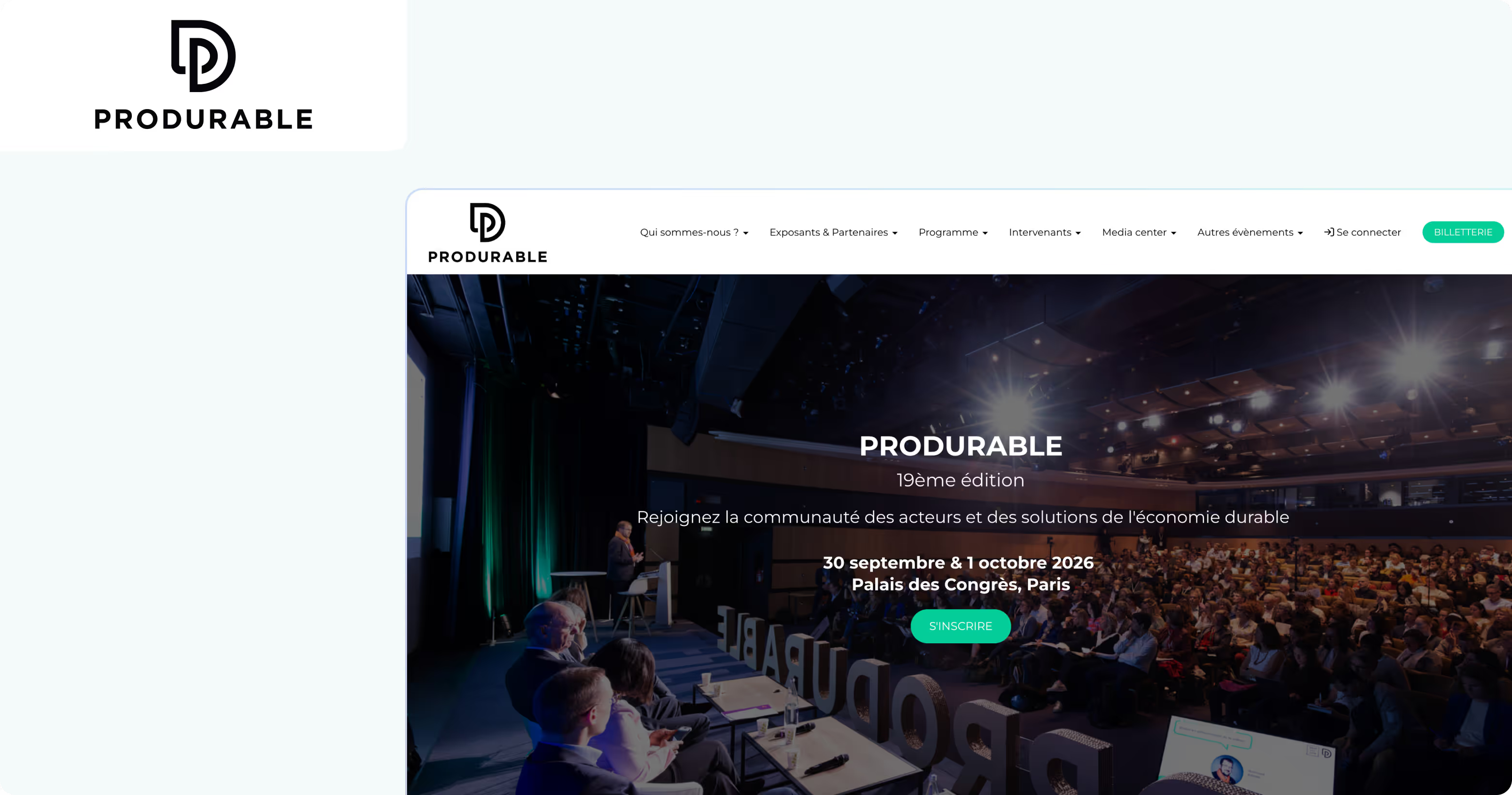
For reporting teams, it is most useful for surveying best practice, understanding how peers approach disclosure, and exploring tooling options, rather than for detailed guidance.
Best suited for practitioners seeking breadth and market overview.
World Class Corporate ESG Strategy
Date: December 2026 (TBC)
Location: Portland, OR, USA
End-of-year strategy events can be useful for reflecting on reporting processes and planning improvements for the next reporting cycle. This type of conference typically focuses on governance, compliance, and execution.

Best suited for reporting leaders and ESG programme owners preparing for the following year.
What the Future of ESG Reporting Means For Reporting Teams
In 2026, ESG reporting conferences are most valuable when they help teams improve execution. Regulatory expectations are increasingly clear; the challenge lies in data quality, governance, and repeatability.
Conferences can clarify expectations and provide peer reference points, but lasting improvement usually comes from changes to data management, controls, and reporting workflows between reporting cycles.
Making Conference Attendance Useful for Reporting Teams
Conference attendance only delivers value when insights are translated into action.
Teams that benefit most tend to:
- prioritise sessions on processes, controls, and data
- compare approaches with organisations facing similar reporting challenges
- document concrete changes to governance, systems, or workflows
Conferences help clarify expectations, but reporting improvements usually depend on better data management and verification.
For teams working with environmental and waste-related data, geoFluxus resources on waste data management and reporting can help bridge the gap between insight and execution.
Conclusion
In 2026, ESG reporting conferences are most useful when they support better reporting, not just better awareness. The events listed here differ in scope and depth, but each offers insight into how sustainability reporting, governance, and data practices are evolving.
Choosing the right conference depends on your role and constraints. Strategy-led events provide context. Reporting-focused conferences help improve execution. Both can be useful when attendance is intentional and outcomes are clearly defined.
Want to learn more about how geoFluxus can help you achieve your ESG goals? Get in touch today to book a demo.
FAQs
What is an ESG reporting conference?
An ESG reporting conference focuses on sustainability reporting, ESG disclosures, regulatory requirements, and the processes organisations use to collect, manage, and report ESG data.
Who should attend ESG reporting conferences in large organisations?
They are most relevant for sustainability teams, reporting leads, finance teams, risk management, and corporate affairs professionals involved in ESG disclosures.
Are ESG reporting conferences useful if we already understand CSRD and ESRS?
Yes. Most challenges are operational rather than regulatory. Conferences help teams learn how peers implement reporting processes, governance, and data systems.
How many ESG reporting conferences should a team attend each year?
How many ESG reporting conferences should a team attend each year?
Do ESG reporting conferences help improve data quality?
They do not fix data issues directly, but they help teams understand best practice for governance, controls, and systems that support reliable reporting.