

“Over the years we’ve invested significantly in our field data team - focusing on producing trusted ratings. While this ensures the accuracy of our Ratings, it doesn’t allow the scale across the thousands of projects that buyers are considering.”

For more information on carbon credit procurement trends, read our "Key Takeaways for 2025" article. We share five, data-backed tips to improve your procurement strategy.

One more thing: Connect to Supply customers also get access to the rest of Sylvera's tools. That means you can easily see project ratings and evaluate an individual project's strengths, procure quality carbon credits, and even monitor project activity (particularly if you’ve invested at the pre-issuance stage.)
Book a free demo of Sylvera to see our platform's procurement and reporting features in action.
What ISO 14001 is and what it expects from waste reporting
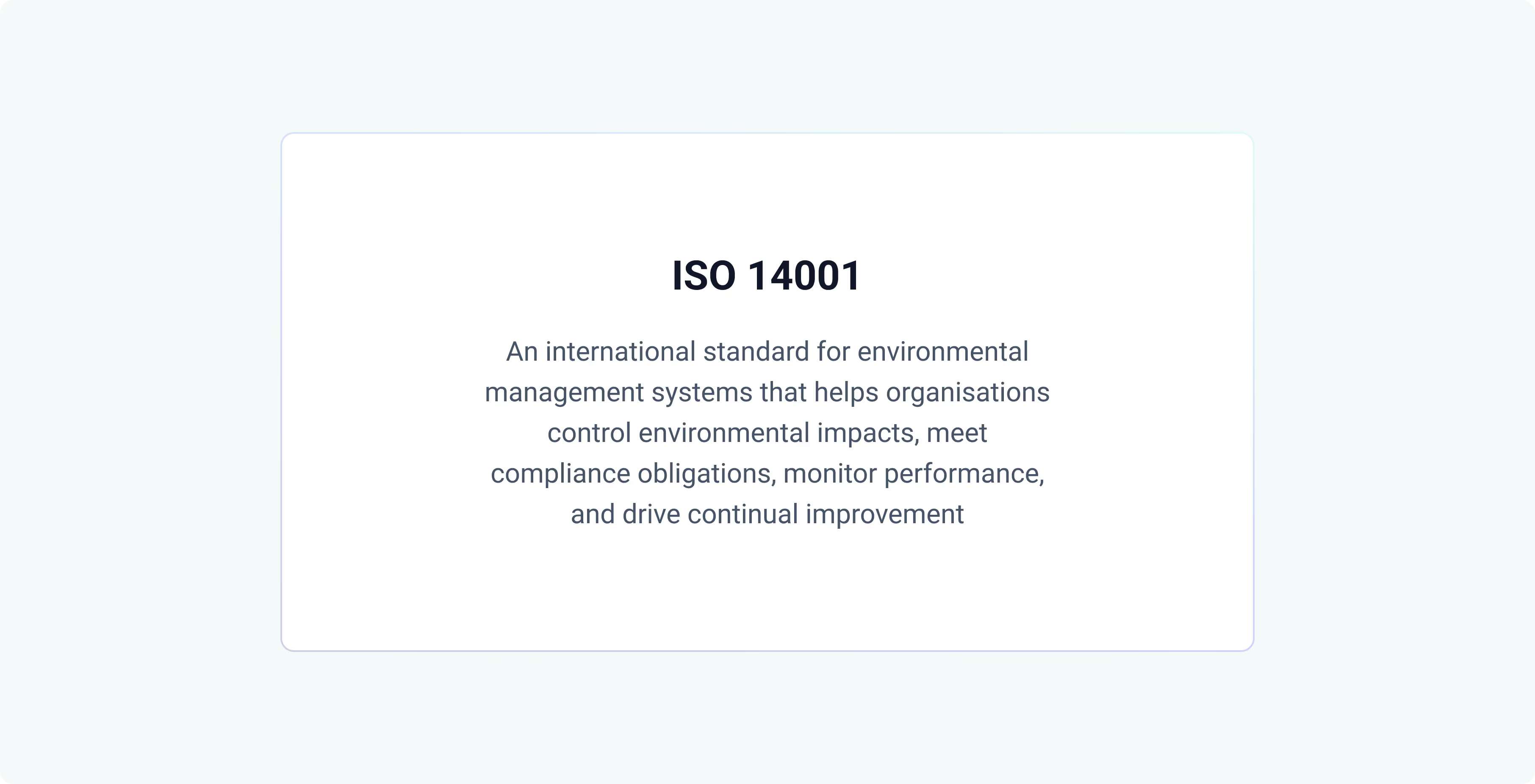
ISO 14001 is the internationally recognised standard for environmental management systems (EMS). It provides a framework for organisations to manage environmental aspects, meet compliance obligations, control operations, evaluate performance, and drive continual improvement.
ISO 14001 requires organisations to determine their environmental aspects and which of them are significant, how their activities, products, and services interact with the environment. For many businesses, waste generation is one of the most tangible and measurable aspects, which is why waste data often plays a central role in demonstrating EMS control and performance.
Organisations decide what to monitor and measure based on significant aspects and compliance obligations, then retain documented information to demonstrate control and results across the EMS scope. Waste often becomes a focus because it is measurable, frequently involves external parties, and is tied to documentation and treatment routes that auditors can sample to assess whether controls are implemented consistently.
What most organisations track for waste under ISO 14001
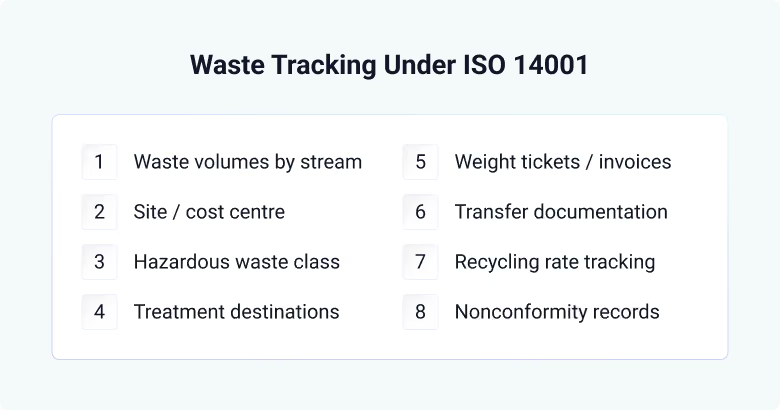
ISO 14001 does not prescribe a fixed set of waste metrics. In practice, organisations usually converge on a core set of data and supporting evidence because it enables both audit response and internal oversight.
A common approach is to track waste quantities by stream, broken down by site or cost centre. For hazardous waste and other regulated streams, organisations also record the required classifications and capture destination and treatment method information where available. They retain the evidence that supports the records, such as weight tickets, invoices, transfer documentation, and any supporting approvals or licences used in due diligence. Many also track a small set of indicators that management can use consistently, such as recycling rate, waste trends, or progress against reduction targets.
ISO 14001 also expects organisations to deal with nonconformities in a structured way. A nonconformity is a failure to fulfil a requirement, including requirements from the EMS itself or from compliance obligations. When waste reporting gaps undermine evidence—missing documentation, incorrect stream mapping, or inconsistencies between internal records and contractor outputs—organisations need a defined way to record the issue, correct it, and retain evidence of what was done so the EMS remains auditable.
How HSE teams can streamline and align waste reporting
Alignment usually comes down to three things: standardised definitions, a structured evidence trail, and a repeatable review cadence. The benefit is practical: less time spent reconciling site and contractor data, faster evidence retrieval when needed, and more reliable insights for management review. Here is a practical way to streamline waste reporting in your organisation:
- Standardise waste stream definitions. Create one internal stream dictionary with clear inclusions/exclusions and examples so identical materials are recorded the same way across sites.
- Map contractor categories to your internal streams. Build and maintain a mapping table so supplier portal labels don’t dictate your reporting structure.
- Define the minimum evidence set per stream and obligation. Decide what “good evidence” looks like (e.g., transfer documentation, weight/invoice reference, destination/treatment info where available) and keep it consistent.
- Create one predictable evidence pathway. Set where documents live, naming rules, and ownership so retrieval isn’t dependent on individual inboxes or local folders.
- Use a structured data format for consolidation. Standardise units, periods, site identifiers, and required fields so consolidation becomes mechanical rather than interpretive.
- Run a light, repeatable review cadence. Do routine completeness or anomaly checks monthly or quarterly, plus an annual review that feeds management review and compliance evaluation.
- Treat reporting gaps as EMS issues. When documentation is missing or mapping is wrong, log it, correct it, and retain evidence of the fix so auditability improves over time.

Using the same foundation for ESG and CSRD
For large organisations, the same waste reporting foundation can also serve sustainability reporting. Waste data often needs to support internal control, management reporting, and external disclosure. Maintaining separate datasets for audits, internal reporting, and ESG/CSRD workflows multiplies effort and increases the risk of conflicting numbers.
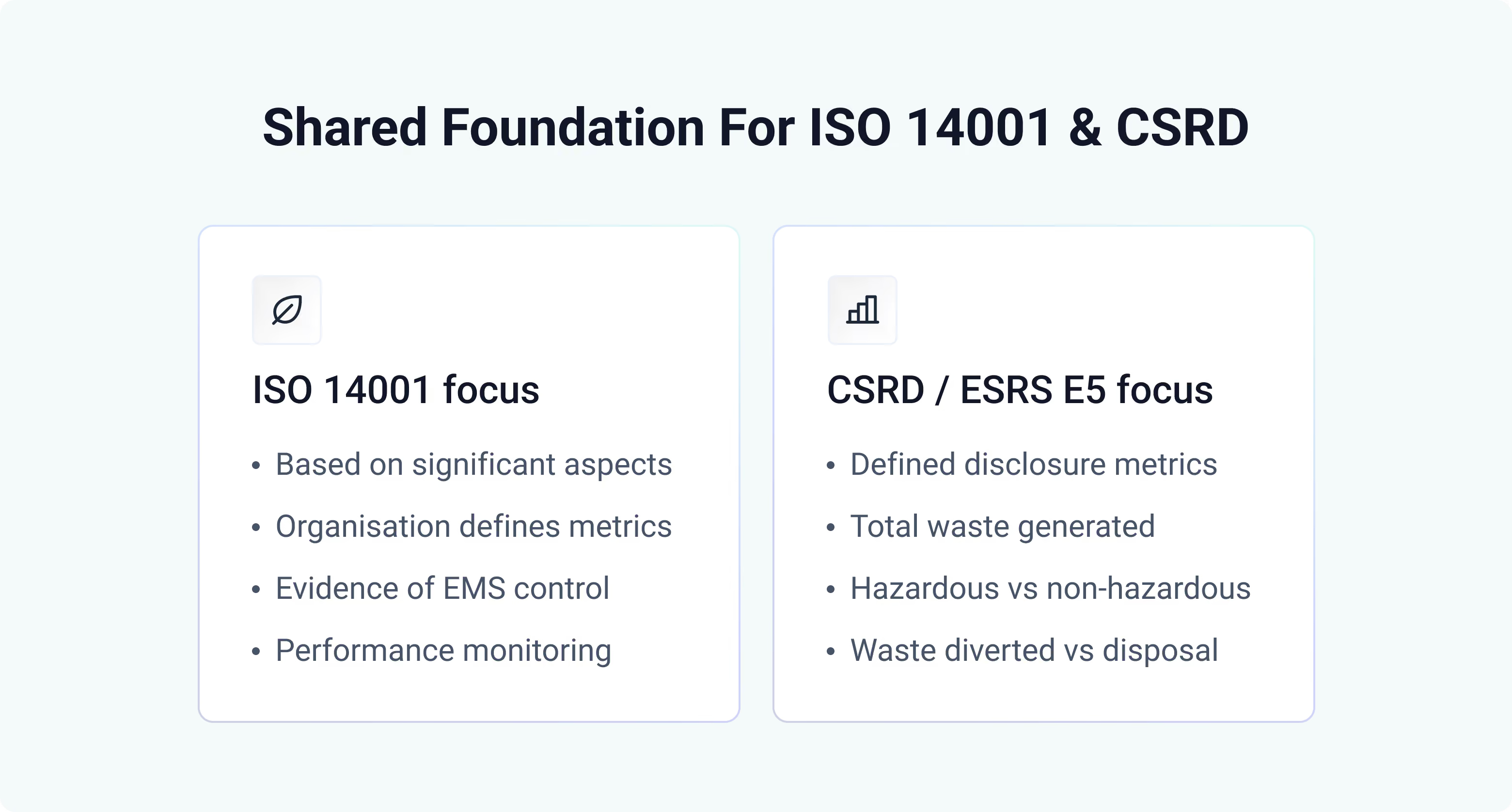
ISO 14001 and CSRD/ESRS both rely on traceability and evidence, but they standardise different things:
- ISO 14001: organisations decide what to monitor and measure based on their significant environmental aspects and compliance obligations, and retain documented information to demonstrate control and performance across the EMS scope.
- CSRD/ESRS (when ESRS E5 is material): organisations report against defined disclosure requirements and metrics for waste, typically including total waste generated, hazardous versus non-hazardous, and breakdowns by waste diverted from disposal versus waste directed to disposal. This pushes reporting toward complete, standardised totals for waste from own operations rather than only the streams a company internally treats as significant.
There is enough overlap that many organisations benefit from maintaining a single, detailed, standardised waste dataset. If you already have a waste dataset for ISO 14001 and want to expand it to support ESG and CSRD-style reporting, it helps to keep the ISO structure—consistent stream definitions, site breakdowns, and linked evidence—while adding the standard fields sustainability reporting tends to require. In practice, that usually means capturing complete totals for hazardous and non-hazardous waste from your operations, plus destination and treatment breakdowns that allow you to produce a reliable total waste figure across the organisation.
How geoFluxus supports ISO 14001-ready waste reporting
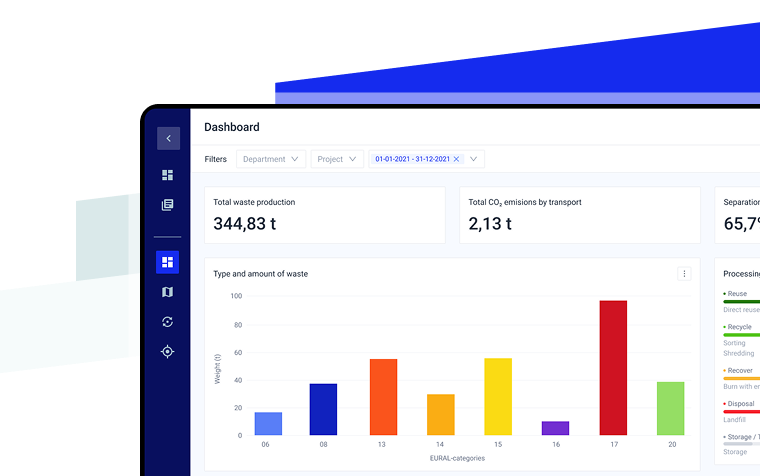
geoFluxus can act as a central waste data database for your organisation. It brings waste-related inputs together across sites and contractors—such as invoices, weight tickets, and transfer documentation—and structures them into a consistent dataset. Each reported figure can be linked back to the underlying evidence, so your waste numbers remain easy to verify and defend.
With one standardised dataset in place, geoFluxus helps you keep waste stream definitions consistent across the footprint and reduces the manual effort of consolidating contractor portals and site spreadsheets. The output is practical: exportable Excel files and reporting views that support ISO 14001 oversight and audit sampling, while also providing the totals and breakdowns needed for ESG and CSRD-style reporting from the same underlying source.
Conclusion
ISO 14001 compliance in 2026 requires waste reporting that is consistent across sites, traceable to evidence, and easy to retrieve when needed. Most organisations achieve this by standardising stream definitions, mapping contractor categories into one structure, defining a minimum evidence set, and running a repeatable review cadence that treats reporting gaps as EMS issues.
For large organisations, the same foundation can also support ESG and CSRD-style reporting. When one detailed, standardised dataset produces reliable totals and breakdowns across operations, parallel reporting workflows reduce and the risk of conflicting numbers drops.
geoFluxus supports this approach by acting as a central waste data database: structuring waste documents into a consistent dataset, linking every figure to evidence, and producing exportable outputs for ISO oversight and sustainability disclosure from the same source.
FAQs
What is the most common ISO 14001 waste reporting risk?
Fragmented or inconsistent waste data across sites and contractors, which makes evidence harder to retrieve and results harder to compare.
How often should evaluation of compliance be performed?
On a defined schedule set by the organisation, frequent and robust enough to maintain knowledge of compliance status.
What do ISO 14001 auditors typically focus on?
Whether compliance obligations are understood and evaluated, controls are implemented, documented information is retrievable, and nonconformities are addressed with corrective action where needed.
Does ISO 14001 require a specific waste reporting format?
No. ISO 14001 doesn’t prescribe a format; it expects organisations to monitor/measure what’s relevant and retain documented information as evidence.
How can waste reporting support both ISO 14001 and sustainability reporting?
By maintaining one harmonised dataset with linked supporting documentation that can serve both internal evaluation and external disclosure.