


“Over the years we’ve invested significantly in our field data team - focusing on producing trusted ratings. While this ensures the accuracy of our Ratings, it doesn’t allow the scale across the thousands of projects that buyers are considering.”

For more information on carbon credit procurement trends, read our "Key Takeaways for 2025" article. We share five, data-backed tips to improve your procurement strategy.

One more thing: Connect to Supply customers also get access to the rest of Sylvera's tools. That means you can easily see project ratings and evaluate an individual project's strengths, procure quality carbon credits, and even monitor project activity (particularly if you’ve invested at the pre-issuance stage.)
Book a free demo of Sylvera to see our platform's procurement and reporting features in action.
Why Waste Data Creates Specific Assurance Risk
Waste data is generated outside central systems. It lives in contractor invoices, weighbridge tickets, transport documents, and periodic contractor reports. A single site working with several waste processors will receive data in different formats, structured differently, on different schedules.
Pulling that data together consistently across multiple contractors, sites, and document types takes significant reconciliation effort — particularly given the volume of individual collection records a multi-site operation generates.
The HSE manager's position in this
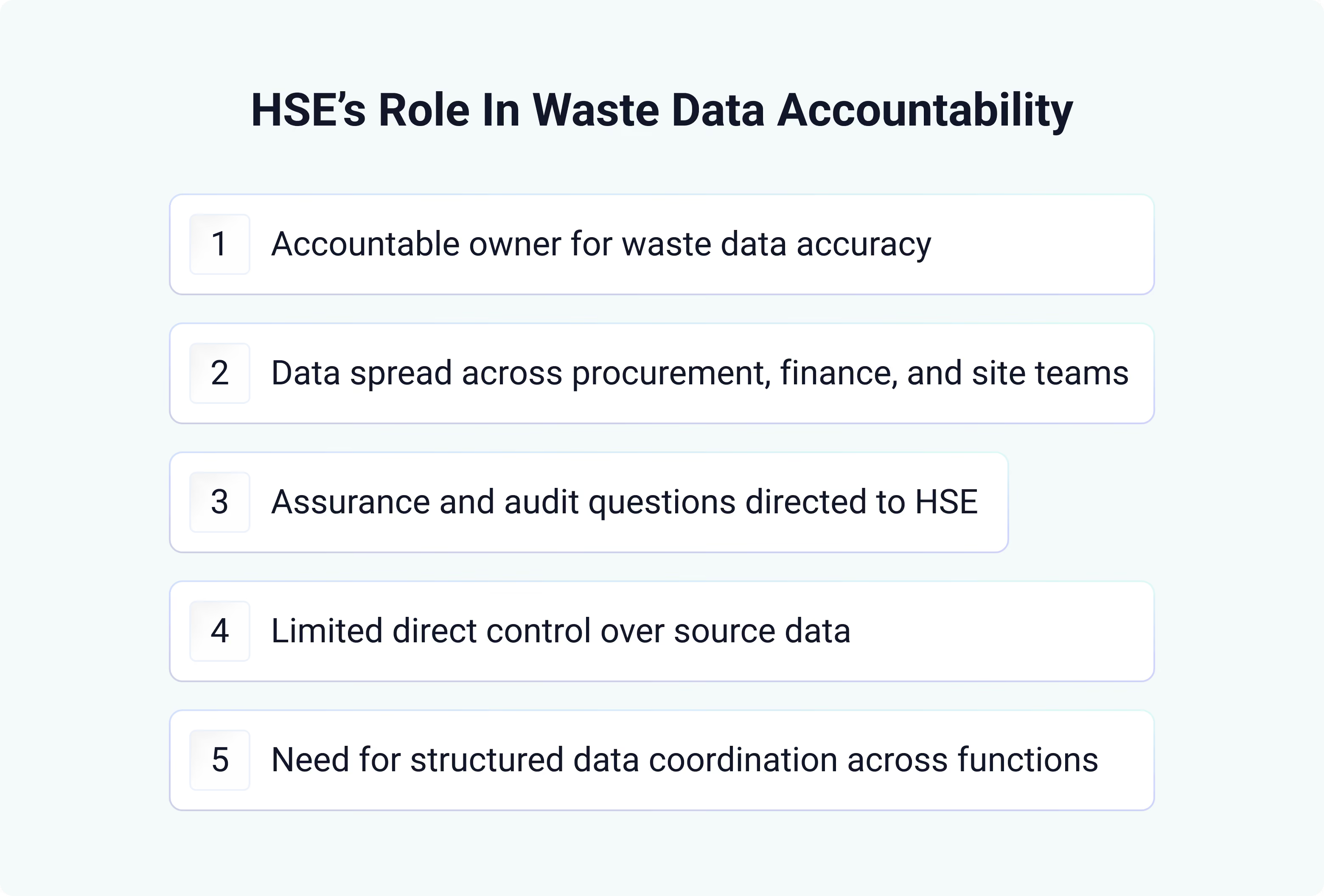
HSE managers are often the named accountable owner for waste data correctness in a CSRD sustainability statement. In practice, the underlying data sits across several functions: procurement manages contractor relationships, finance handles invoices, local site teams generate the primary records.
When assurance testing begins, questions come to HSE. Where did this figure come from? Why does this site show a gap in October? Why does this contractor's report not reconcile with the invoice total? The answers depend on data that HSE doesn't always directly control — and that's the structural challenge that good data preparation can address.
Double Materiality and ESRS E5: What HSE Managers Need to Know
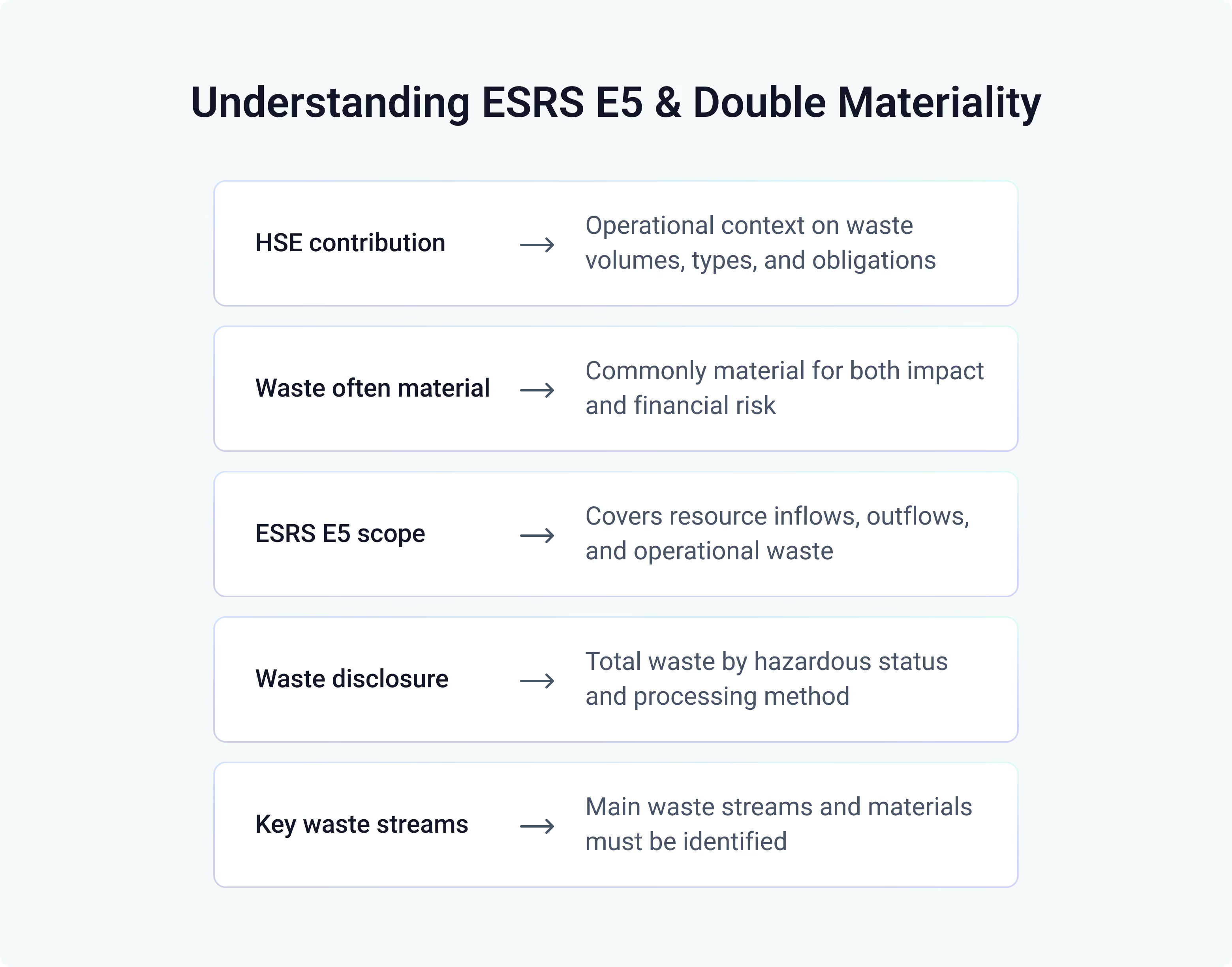
The double materiality assessment — which determines which ESRS topics apply to your reporting — is typically led by sustainability or ESG teams. For HSE managers, the usual role is as an input provider: supplying operational context on waste volumes, waste types, and known environmental obligations.
For companies with significant physical operations, waste is frequently assessed as material on both impact and financial dimensions. For manufacturing and industrial companies in particular, it is reasonable to work on the assumption that ESRS E5 applies in full — covering resource inflows, resource outflows, and waste from own operations.
Where ESRS E5 applies, it requires disclosure of total waste generated, broken down by hazardous and non-hazardous, and by processing method (recovery or disposal) per waste stream. Companies also need to describe their relevant waste streams by name and key materials.
What Assurance Providers Test
CSRD sustainability assurance works primarily through sampling. An assurance provider will select specific data points from your sustainability statement and trace them back through the underlying documentation — typically invoices, weighbridge tickets, and waste transfer documents. The method used to aggregate those documents into the disclosed total needs to be clearly documented.
In practice, assurance providers test across three areas:
Completeness Does the reported data cover the full scope claimed? If your sustainability statement reports waste for all EU operations, the assurance provider may sample specific sites or time periods and check whether all contractors and collection events are accounted for.
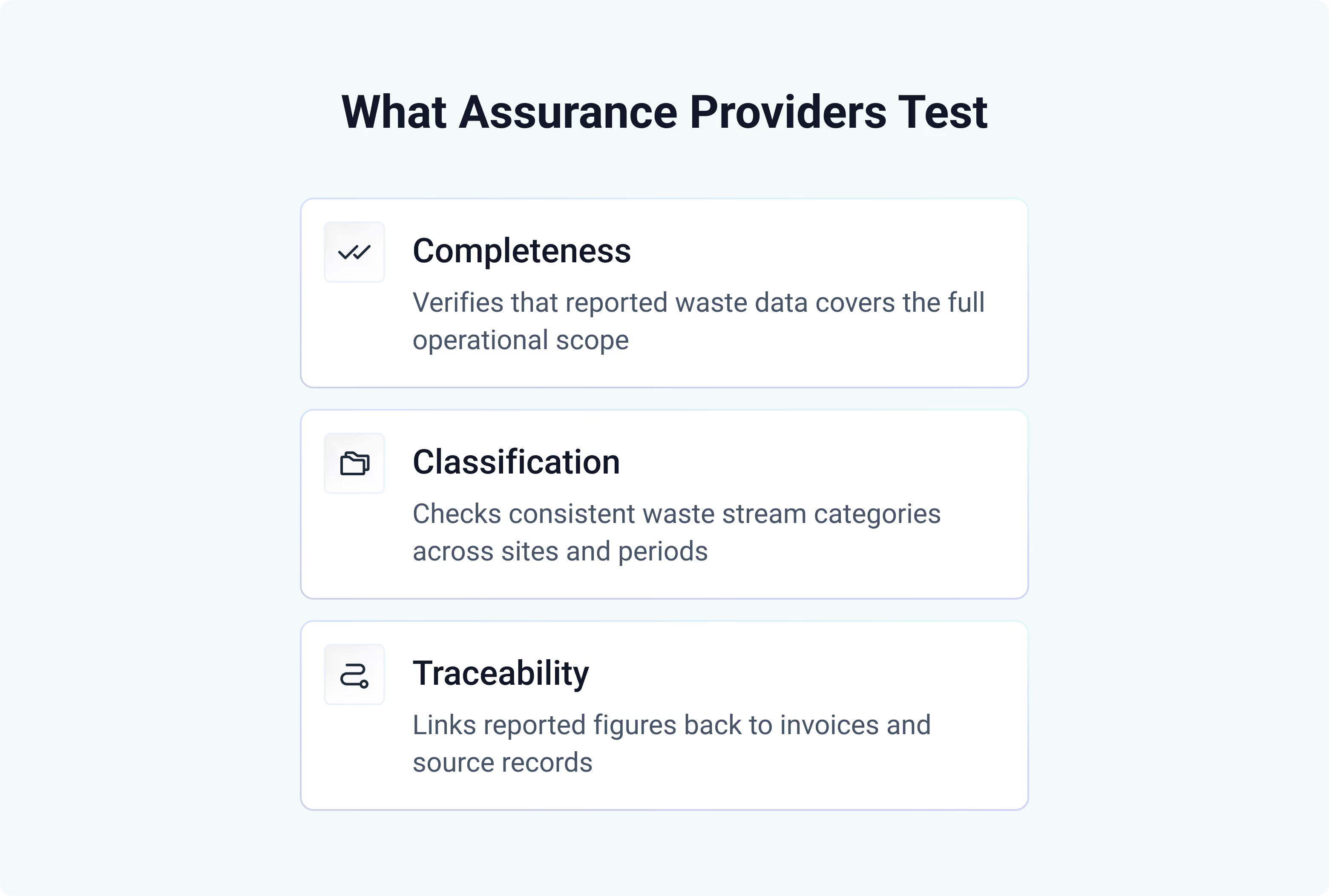
Classification Are waste streams consistently classified across sites and reporting periods? The assurance provider will want to confirm that the same materials are grouped into the same streams consistently across the organisation and over time.
Traceability Can every material figure in the sustainability statement be linked back to source documents? A reported total for a specific waste stream needs a clear line of evidence: from the disclosed figure, back through the aggregation method, to the underlying invoices and collection records.
The Admin Burden of Assembling Auditable Waste Data
Many organisations track waste data manually, extracting figures from invoices and contractor reports into spreadsheets. For small operations this is manageable, but for multi-site operations with multiple waste processors the reconciliation effort across invoice lines, stream definitions, and missing documents is substantial — and repeats every reporting cycle.
Spreadsheets have a specific limitation in the context of CSRD assurance: they can record a figure but cannot link it back to the source document it came from. When an assurance engagement begins and a provider samples a specific data point, that traceability gap becomes a practical problem.
Where geoFluxus reduces the administrative burden
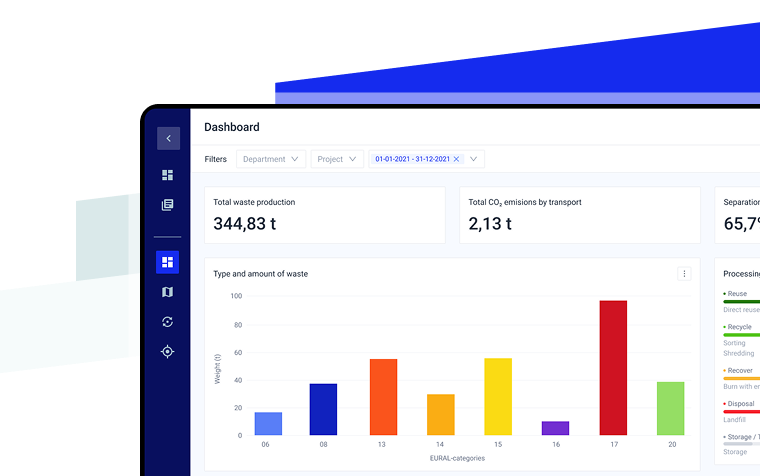
geoFluxus addresses the admin burden at the source. Its DocumentAI automatically scans and classifies incoming invoices and waste documents, extracting the relevant data points without manual entry. Those data points are then consolidated in the platform, where each figure is directly linked to the underlying source documents that support it.
For assurance purposes, the evidence chain the assurance provider needs — from disclosed figure back to source document — is already in place before the engagement begins.
How to Prepare Waste Data You Can Substantiate
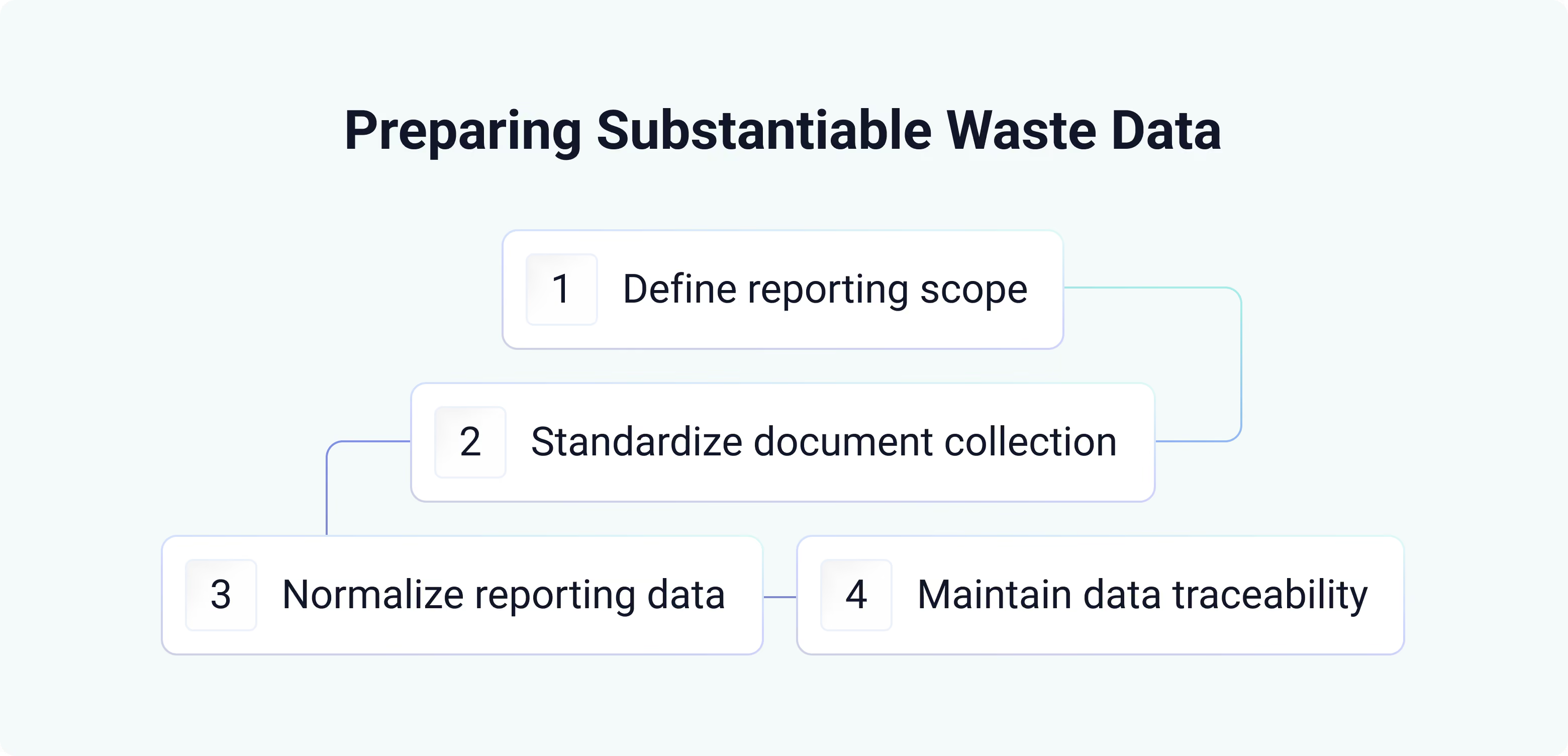
1. Define what's in scope
Start by documenting which sites, entities, contractors, and time periods are included in your waste reporting. This needs to be explicit and agreed before data collection begins.
2. Collect documents systematically
For each site and contractor, establish what documents you need: invoices, weighbridge tickets, periodic contractor reports. Define a minimum documentation set and make sure it is collected consistently across all contractors and collection events.
3. Normalise your data at assembly
When building your reporting dataset — whether monthly, quarterly, or annually — normalise incoming contractor data into a consistent internal structure. That means aligning units (tonnes vs kg), standardising stream names, and ensuring material descriptions are comparable across sites. Document your stream definitions and keep them consistent year over year. This is what makes figures from different contractors and locations aggregable into a single reliable dataset.
4. Maintain traceability from figure to document
Every aggregated figure in your sustainability statement needs a clear line of evidence back to the source documents it was derived from. When assembling your dataset, maintain that link explicitly — which documents, which collection events, which contractors contributed to each reported total.
Conclusion
A CSRD audit is ultimately a test of whether your waste data is complete, consistently classified, and traceable to source documents. The preparation work that makes assurance manageable is largely the same work that makes waste reporting reliable year over year: defining scope, collecting documents systematically, and normalising data into a structure that can be aggregated and substantiated.
That work sits across multiple functions. HSE carries accountability for data correctness, but the underlying data is generated by waste processors, handled by procurement, and processed by finance. Getting waste data into a state that can withstand assurance sampling requires those functions to work from a shared dataset with clear ownership.
The earlier that groundwork is in place, the less disruptive the assurance engagement becomes.
If you want to see how geoFluxus helps organisations centralise and substantiate their waste data, book a demo with our team.
FAQs
What is a CSRD audit in simple terms?
The CSRD requires companies to have their sustainability statement reviewed by an accredited independent assurance provider. The assurance provider tests whether reported data is complete, consistently classified, and traceable to source documents. This process is commonly referred to as a CSRD audit, though the regulation itself uses the term assurance.
What waste data is most likely to be challenged during assurance?
Assurance works through sampling. A provider selects specific data points and asks for the source documents behind them: invoices, weighbridge tickets, contractor reports. Figures that cannot be traced to source documents, or streams classified inconsistently across sites or reporting periods, are where challenges arise.
Is limited assurance lighter than reasonable assurance?
Limited assurance involves fewer procedures and is less resource-intensive. The assurance provider tests whether anything suggests material misstatement, rather than providing a positive opinion. Traceability and consistency in the underlying data still need to be in place.
How do companies determine which processing method to report for each waste stream?
ESRS E5 requires waste to be reported by processing method, recovery or disposal, with a further breakdown by operation type. Waste processors typically specify the treatment method on invoices and transfer documents. Where treatment method is not documented, ESRS E5 requires that destination to be reported as unknown.
How can HSE managers reduce assurance preparation effort?
Centralise data collection, normalise incoming waste processor data into a consistent internal structure, and maintain traceability from each reported figure back to its source documents. For organisations that want to automate the manual work involved in preparation, geoFluxus automates the document scanning and data extraction process, consolidates waste data across sites and processors, and maintains the link between each reported figure and its source documents directly in the platform — so the evidence chain an assurance provider needs is already in place before the engagement begins.