

“Over the years we’ve invested significantly in our field data team - focusing on producing trusted ratings. While this ensures the accuracy of our Ratings, it doesn’t allow the scale across the thousands of projects that buyers are considering.”

For more information on carbon credit procurement trends, read our "Key Takeaways for 2025" article. We share five, data-backed tips to improve your procurement strategy.

One more thing: Connect to Supply customers also get access to the rest of Sylvera's tools. That means you can easily see project ratings and evaluate an individual project's strengths, procure quality carbon credits, and even monitor project activity (particularly if you’ve invested at the pre-issuance stage.)
Book a free demo of Sylvera to see our platform's procurement and reporting features in action.
The Data Problem Behind Construction Waste
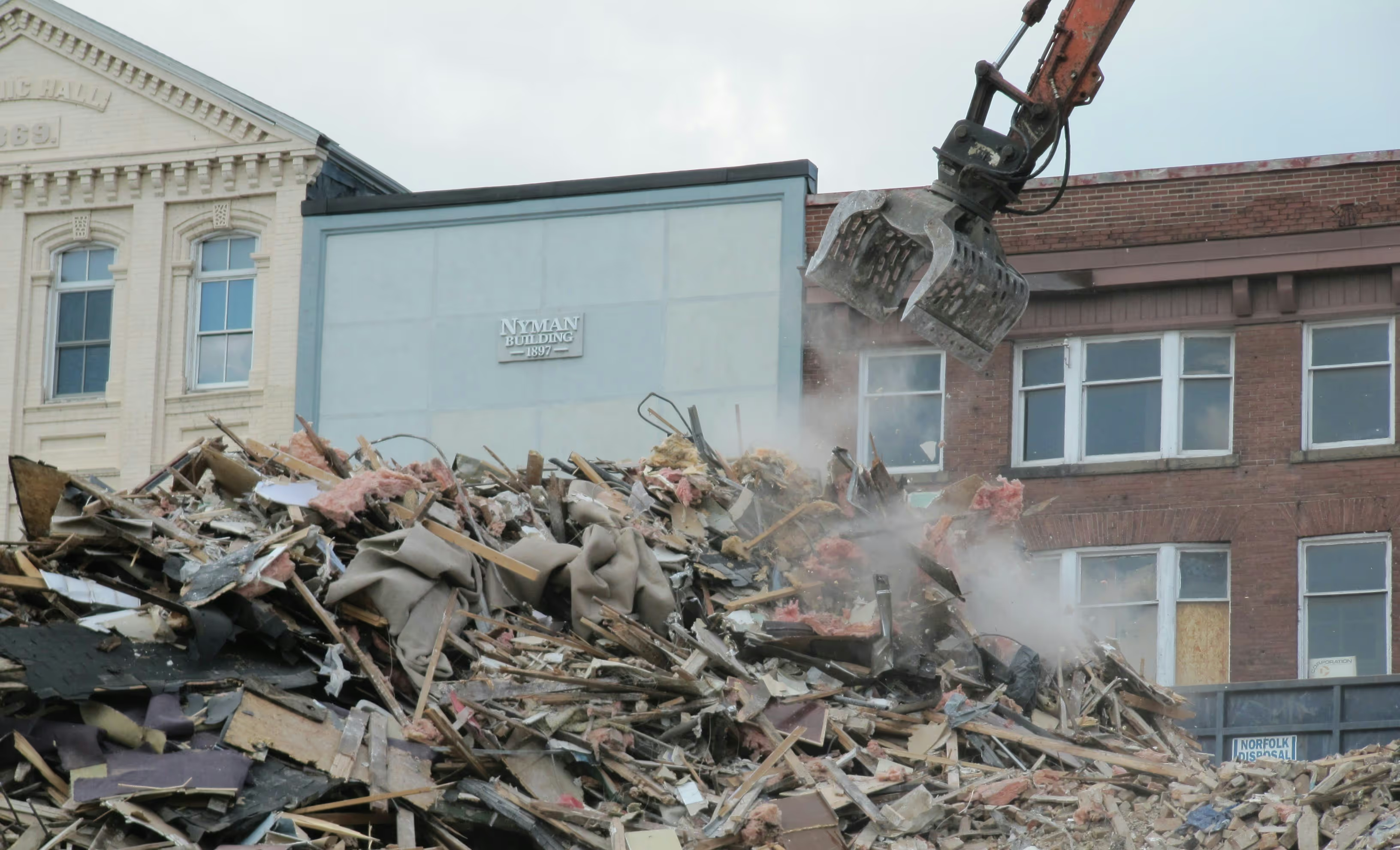
According to Geographies of Waste (PhD thesis by Rusnė Silerytė, Delft University of Technology, 2023), construction and demolition waste (C&DW) accounts for approximately 30–40% of total EU waste. This is mainly due to the heavy, high-volume materials the sector handles, including excavated soil, demolition debris, concrete, and stone.
Across construction projects, waste materials are often mixed, underreported, or misclassified, complicating waste audits and compliance with local regulations on waste disposal. Reporting is usually fragmented across contractors and subcontractors, each using different documentation and waste codes. In many EU countries, waste is reported by the payer of the waste service rather than the actual producer. At the same time, official systems record only annual totals, making it difficult to verify what happened to each material stream.
Yet the potential for reusing and recycling construction debris is enormous — from reclaimed metals to recycled concrete and wood. These opportunities remain largely unmeasured, however, because data is incomplete and waste tracking is unreliable. And as construction companies compete for tenders, the ability to provide verified and transparent waste data is becoming a decisive competitive advantage. Projects are increasingly awarded to contractors who can prove circularity and responsible waste management, rather than just claim it.
All the more reason to get a grip on your construction waste.
The Hidden Cost of Poor Waste Management Practices
Poor waste data drains money, time, and credibility. Across large construction projects, missing or inconsistent information quietly erodes efficiency, increases costs, and exposes companies to compliance risk.
- Financial impact
Administrative teams spend hours typing over handwritten bills of lading, scanning invoices, and consolidating data from multiple contractors. With so many sites and suppliers, getting everything into one clear overview becomes a full-time task. Inefficient waste management processes can also result in discarding materials that could have resale value — or missing payments for recyclables that processors would otherwise purchase. - Reputational impact
In today’s construction tenders, sustainability claims need evidence. When data can’t back waste management practices, even genuine recycling efforts go unseen. Weak documentation can make a company appear less committed to environmental responsibility, costing contracts where circularity and transparency are part of the evaluation criteria. - Compliance risk
Construction is one of Europe’s most significant sources of waste, and a key focus for ESG reporting and audits. Taking waste compliance seriously protects companies from time-intensive reviews under frameworks such as the CSRD. Verified, centralized data means audit trails are ready when inspectors — or clients — request proof.
Inefficient data handling hinders effective waste management and obscures the full potential of how waste management contributes to environmental sustainability. Improving data transparency enables companies to reduce waste, reclaim and recycle materials, and recover unused materials that still hold value.
From Tonnes to Intelligence: Rethinking Waste Data
Intelligent construction waste management software connects every stage of the construction process — from material usage to proper disposal and recovery — creating one verifiable picture of what really happens to waste generated on-site.
1. Traceability and verification
Each tonne of waste should be linked to a verified record, such as an invoice, manifest, or digital waste tracking entry. This builds a transparent audit trail across contractors and sites, protecting companies during ESG reviews and compliance audits.
2. Standardisation
Aligning European waste codes (LoW) enables meaningful benchmarking of waste management performance across projects and regions. Without shared standards, comparing waste streams or validating waste reduction efforts remains nearly impossible.
3. Granularity
Understanding what’s actually in construction and demolition debris — from wood waste and packaging materials to metals and recyclable plastics — reveals new opportunities for reusing materials and minimising waste on-site. Greater detail also improves project efficiency, as it shows which materials can be salvaged for future projects.
4. Emissions integration
When waste management data is linked to verified emission factors, waste reduction becomes a measurable contributor to greenhouse gas savings. Connecting waste tracking with carbon data makes environmental impact both visible and reportable for ESG reporting frameworks like CSRD, supporting environmental responsibility across all construction activities.
In short, smarter waste data turns construction waste from a logistical burden into a source of actionable insight — helping construction professionals make informed decisions, ensure compliance, and build a more sustainable future.
Where Digital Tools Can Help
Not all waste management software is built for the same purpose. Some platforms support waste operators, while others act as a construction waste management system that helps companies get a clear grip on the waste they generate. The tools below address different parts of that challenge — from verified data to on-site monitoring.
geoFluxus — for managing enterprise construction waste
📍 Netherlands
geoFluxus helps organisations, like construction companies, finally make sense of their waste. Teams can upload and share all waste-related documents — from invoices and manifests to weighbridge tickets — in one platform. The software automatically extracts and verifies waste data, checks it against national waste registries, and turns it into verified insight on how materials are processed, transported, and treated — providing robust construction waste management tracking across projects and sites.
Data becomes filterable by project, location, or waste stream, giving full transparency and assurance that nothing is missed. Creating the kind of dedicated industry dashboards sustainability teams need for quick reporting. Built on deep waste expertise, geoFluxus identifies inefficient processing routes, recommends closer or higher-value treatment options, and benchmarks each site’s performance against national averages. The result is one clear, auditable view of your company’s circular impact — ready for CSRD, or any client tender that demands proof of responsible waste management.
Sensoneo — for on-site waste monitoring
📍 Slovakia
New developments on the waste management side also offer interesting opportunities for construction. Solutions like Sensoneo, which uses IoT sensors to track container fill levels and optimise collection routes, are helping haulers and municipalities make waste collection more efficient. While these systems are primarily designed for waste operators, large construction sites can also use them to monitor skips, prevent overflow, and reduce unnecessary transport.
Teamoty Recycle — for project-level waste tracking
📍 France
Teamoty Recycle links scheduling, logistics, recycling, and site traffic into one digital solution — an interesting approach for companies looking to manage all on-site logistics from a single platform. Through the software, users can track the number and type of waste bin requests, monitor returns and sorting quantities, manage deadlines and overruns, and follow up on bin consumption over time. This provides better oversight of waste handling and ensures full traceability across the construction site.
Madaster — for material registration and reuse
📍 Netherlands
Madaster helps make circular construction practical by providing clear insight into the materials and products used in a building — including their CO₂ storage, value, and reuse potential. The platform enables teams to share material data with architects, contractors, and owners, ensuring everyone works from the same verified source.
At project completion, all information can be digitally transferred to the owner, who can use it for maintenance, resale, or future deconstruction. This makes Madaster a valuable tool for embedding long-term circular thinking in every construction project.
AMCS — for waste collection and logistics operators
📍 Ireland
AMCS is a comprehensive operations platform for waste management companies. It helps haulers and recyclers manage fleet routes, weighing systems, billing, and customer logistics — making daily collection and processing more efficient.
While not designed for construction companies, tools like AMCS play an important role on the service-provider side of the industry — helping ensure the waste you generate is collected, transported, and treated more efficiently.
Example: Turning Demolition Waste into Circular Value
Dutch construction and renovation company Hemubo set out to prove that circularity starts with data. In a large-scale housing renovation project, Hemubo worked with geoFluxus and TU Delft researchers to trace and recover wood and glass components that would otherwise become demolition waste.
Using the geoFluxus platform, the team mapped the potential wood and glass waste streams, which would be suitable for window frame and flat glass production, as both are highly recyclable materials. The analysis showed that in the Amsterdam Metropolitan Area alone, there is enough wood and glass waste to produce 172,160 window frames per year, reducing 3526t of CO₂ eq. Emissions from incineration and coming up to €4.5M potential savings of raw material costs.
The pilot project has demonstrated how digital waste tracking can contribute not only to minimizing waste but also to both environmental and cost savings.
Building a More Sustainable Future
Circular construction won’t be achieved by collecting more data — but by making sense of it. With intelligent, verified data, construction companies can finally see what happens to their waste: how much is diverted, where it’s processed, and how efficiently resources are reused. This clarity unlocks more than compliance — it enables smarter procurement, lower emissions, and measurable progress toward circularity.
Platforms like geoFluxus bring this visibility within reach. By connecting all waste-related documents, checking them against national registries, and benchmarking results against national averages, geoFluxus turns hidden waste flows into actionable insight.
The next era of construction will be defined not by who generates the least waste, but by who can prove how it’s managed, recycled, and reused. Verified waste data isn’t just an ESG requirement — it’s how the construction industry builds a more efficient, transparent, and sustainable future.
FAQs
What is construction waste management software?
It’s a digital system that helps construction companies track, analyse, and verify the waste generated on their sites. The best platforms consolidate data from contractors and recyclers, create audit trails for compliance, and provide insight into waste volumes, costs, and circular performance.
What is the best construction waste management software for enterprises?
For large, multi-site enterprises, the key is data verification — not just tracking bins or invoices. geoFluxus stands out because it connects all waste-related documents, checks them against national registries, and produces audit-ready insights for CSRD and ESG reporting. It helps construction teams understand exactly where their waste goes and how circular their operations really are.
How does software help with CSRD/ESRS compliance?
Under CSRD and ESRS E5, companies must report detailed figures on waste generation, treatment, and related emissions. Good construction waste management software automates this process — collecting waste data from different contractors and locations, standardising it, and calculating the exact numbers required for disclosure. Platforms like geoFluxus then link these results to verified source data, ensuring every figure in your sustainability report is both accurate and traceable — without the manual effort of consolidating spreadsheets or invoices.
Can software help track Scope 3 waste emissions?
Yes — geoFluxus provides verified estimates of Scope 3 emissions from waste transport. Using the weight of each waste stream and the distance between pickup and drop-off locations, the platform automatically calculates the CO₂ impact of transporting waste.
How does geoFluxus differ from other platforms?
Unlike tools built for haulers or municipalities, geoFluxus is designed for companies that generate waste — especially in construction. It combines data extraction, verification against national registries, and expert waste analytics to deliver one reliable overview of all waste flows. Beyond compliance, it enables companies to benchmark performance, reduce costs, and demonstrate measurable circular progress.